 (0 users)


 view


Members
1 Male
Popularity
 30
Followers
9,470
Origin
 Minneapolis, Minnesota
Genre
 Acoustic
Style
---
Mood
---
Active
 0 to Present...
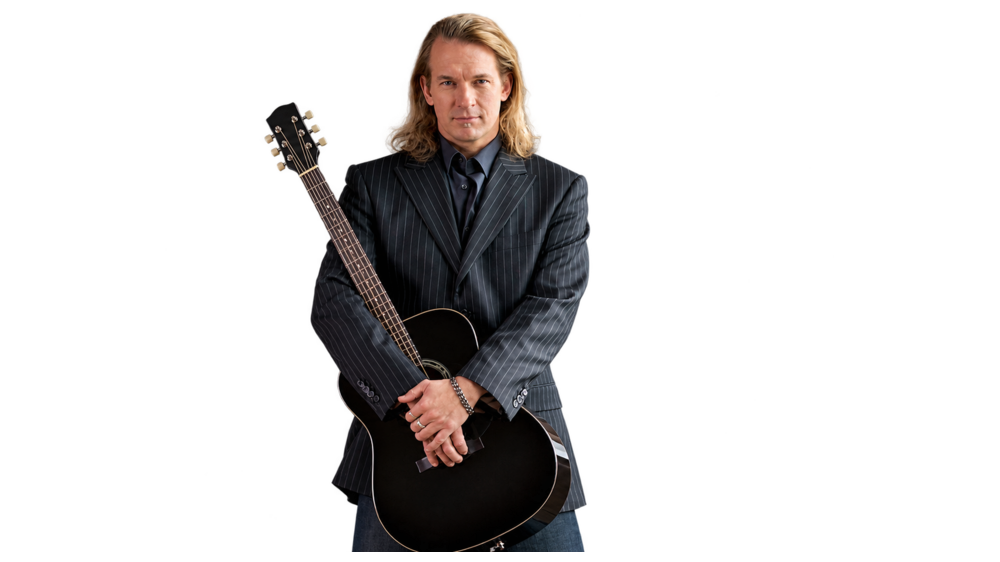
Cutout

1 Male
Popularity
30Followers
9,470
Origin
Minneapolis, MinnesotaGenre
AcousticStyle
---
Mood
---
Active
0 to Present...Cutout

 Most Loved Tracks
| Track | Last.FM Listens | Youtube views | Loves | |
|---|---|---|---|---|
 | Breaking of the Shells | 78,385 | 4 users  | |
| Coffee Break | 19,007 | 4 users | |
| Fingerdance | 22,308 | 4 users | |
| Helms Place | 27,827 | 4 users | |
 | Soulmates | 24,940 | 4 users |
 Music Video Links
Artist Biography
Available in:


Billy McLaughlin is an American acoustic guitarist, composer, and music producer who is regarded as one of the most remarkable figures in contemporary fingerstyle guitar music. He gained international recognition for his extraordinary playing technique, carefully crafted instrumental compositions, and ability to use the acoustic guitar as a complete solo instrument. However, he became particularly well known for his exceptional personal and musical journey: after a neurological disorder made his original playing technique almost impossible, he rebuilt his guitar-playing abilities through an entirely different approach.
McLaughlin's musical work combines elements of contemporary fingerstyle, folk, rock, jazz, and atmospheric instrumental music. His compositions are characterized by rhythmic complexity, melodic expressiveness, and sophisticated harmonic sensitivity. Particularly distinctive is his ability to perform several independent musical voices simultaneously on a single acoustic guitar. By combining bass lines, chord accompaniment, melodies, and percussive elements, he creates musical textures that often resemble several instruments playing together.
Billy McLaughlin was born in 1962 in Minneapolis, Minnesota, and grew up in an environment with a strong interest in music. He developed an enthusiasm for the guitar at an early age. During his teenage years, he explored rock, folk, and various forms of American popular music intensively. He was particularly fascinated by the possibilities of the acoustic guitar, which could provide both rhythmic accompaniment and melodic solo passages.
His musical development was influenced by different guitar traditions. Alongside American folk and rock, he studied classical fingerpicking techniques, alternative guitar tunings, and modern instrumental composition. He gradually developed an individual playing style that differed from traditional accompaniment patterns. Rather than playing chords or melodies separately, he began combining several musical functions.
During his studies at the University of Southern California, McLaughlin deepened his musical knowledge and further developed his instrumental abilities. The combination of technical precision, rhythmic independence, and melodic development became a central element of his guitar playing.
During the 1980s, McLaughlin began establishing himself within the American acoustic guitar scene. His performances featured an unusual combination of technical virtuosity and emotional expression. His use of two-handed tapping techniques, unconventional fingering patterns, and percussive elements gave his music a distinctive character.
An important part of his development was his exploration of the so-called two-handed tapping technique. With this approach, the strings are not set in motion exclusively by the picking hand but also through precisely controlled movements of the fingers on the fretboard. This makes it possible to create melodic and harmonic structures that would be difficult to achieve using traditional guitar techniques.
McLaughlin combined this technique with classical fingerstyle elements and developed a personal musical language. His compositions featured complex rhythmic patterns, flowing melodies, and an unusual variety of tonal colors. The combination of open strings, harmonic structures, and percussive accents became a defining characteristic of his music.
During the late 1980s and early 1990s, McLaughlin released several instrumental albums and developed a growing following. His music received particular recognition among enthusiasts of sophisticated acoustic guitar music. He impressed audiences not only through technical virtuosity but also through his ability to create emotional and atmospheric compositions.
His early releases include Fingerdance and The Archery of Guitar. The Archery of Guitar, in particular, documents his extraordinary technical development and ability to combine several musical voices on a single guitar. The compositions are characterized by rhythmic precision, melodic originality, and sophisticated sound production.
Through his instrumental recordings, McLaughlin increasingly established himself as a distinctive representative of modern American fingerstyle guitar. His music was frequently associated with the innovative playing techniques of guitarists such as Michael Hedges. Nevertheless, McLaughlin developed a personal musical identity distinguished by melodic clarity and pronounced rhythmic sophistication.
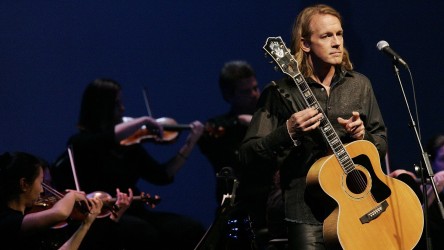
During the 1990s, he expanded his concert activities and performed at numerous guitar festivals, concert events, and music workshops. His live performances were characterized by technical precision, musical energy, and a direct connection with audiences. His ability to perform complex instrumental compositions with apparent ease made him a highly sought-after concert guitarist.
Alongside his solo recordings, McLaughlin developed projects with other musicians. He combined his acoustic guitar with different instruments and musical styles. Collaborating with other artists opened up new compositional possibilities and expanded his musical expression.
A decisive turning point in his life began in the late 1990s. McLaughlin increasingly noticed unusual changes in the mobility of his right hand. Initially, he experienced minor difficulties performing certain passages. Over time, however, his ability to move his fingers independently and precisely deteriorated.
Following extensive medical examinations, he was diagnosed with focal dystonia. This is a neurological movement disorder in which certain muscle groups develop involuntary movements or abnormal postures. For musicians, the condition can have particularly serious consequences because it interferes with the highly precise coordination of individual fingers.
For McLaughlin, the diagnosis represented a profound personal and professional crisis. His established playing technique, which depended on exceptionally refined control of his right hand, became increasingly impossible to perform. Even simple musical movements that he had previously mastered effortlessly became major challenges.
The disorder forced McLaughlin to significantly reduce his concert activities. His career as an internationally recognized acoustic guitarist appeared, for a time, to be over. Alongside the physical limitations, he had to confront the question of whether he would ever be able to play the guitar professionally again.
Rather than abandoning his musical career, McLaughlin began searching for alternative playing techniques. He eventually developed an unusual solution: he decided to completely reverse his established playing approach and exchange the functions of his two hands.
Having previously played right-handed, he began using the guitar in a left-handed playing position. His left hand increasingly took over the functions of the picking hand, while his right hand was used on the fretboard. This transformation required him to develop an entirely new set of motor skills.
For a professional guitarist, this represented an extraordinary challenge. Movements that had become automatic through decades of practice had to be learned again. McLaughlin effectively returned to the fundamentals of guitar playing and gradually rebuilt his technique step by step.
The transition took several years and demanded considerable patience, discipline, and physical adaptation. At the same time, it opened up new musical possibilities. The altered distribution of tasks between his hands produced different movement patterns and new technical approaches, eventually leading to a further development of his personal guitar style.
Particularly remarkable is the fact that McLaughlin did not simply attempt to reproduce his former technique in its entirety. Instead, he developed a new musical language that accommodated his changed physical abilities. This resulted in compositions and arrangements that differed in certain respects from his earlier work.
His return to the concert stage became an extraordinary example of musical adaptability. McLaughlin was once again able to perform professionally and present his music to international audiences. His story attracted considerable attention because it demonstrated that even serious neurological limitations can, under certain circumstances, be partially compensated for through fundamental changes in playing technique.
An important aspect of his later career was his willingness to discuss his condition publicly. McLaughlin began speaking about his experiences with focal dystonia at concerts, lectures, and public events. He described the emotional and practical challenges involved in rebuilding his musical career.
His story was also featured in television reports and documentaries. The combination of musical virtuosity and personal resilience made him a sought-after speaker at events addressing creativity, change, and the management of extraordinary challenges.
Alongside his work as a guitarist, McLaughlin developed a career as a motivational speaker. In his presentations, he combines musical performances with personal experiences, explaining how creative problem-solving and sustained perseverance can open up new possibilities. His message is directed not only toward musicians but also toward businesses, educational institutions, and other organizations.
His musical development following the transformation of his playing technique demonstrates a remarkable combination of technical adaptation and artistic continuity. Although his physical movements changed fundamentally, melodic expression, harmonic diversity, and rhythmic precision remained central elements of his music.
A characteristic feature of his compositions is the use of complex rhythmic structures. McLaughlin frequently treats the acoustic guitar as a complete rhythmic and melodic instrument. Bass lines, chord accompaniment, and melodies are combined, while percussive elements provide additional rhythmic accents.
His use of alternative guitar tunings also opens up a wide range of harmonic possibilities. Changing the tuning of individual strings creates open resonances and unusual chord structures. These techniques allow him to perform complex musical passages with a comparatively fluid approach.
Sound production also plays an important role in his work. McLaughlin favors a clear, resonant guitar tone in which individual musical voices remain clearly distinguishable. His compositions frequently alternate between quiet, atmospheric passages and rhythmically intense sections.
Throughout his career, he has also developed an extensive repertoire of instrumental compositions and musical arrangements. His works combine influences from folk, rock, jazz, and contemporary acoustic music. The strong melodic orientation of his pieces ensures that technical complexity always serves a clear musical purpose.
Another important aspect of his artistic work is his collaboration with other musicians and ensembles. These projects produce arrangements in which his acoustic guitar performs both solo and accompanying functions. The combination of instrumental virtuosity and musical collaboration expands the expressive possibilities of his compositions.
In addition to his concert activities, McLaughlin is involved in music education. He shares his experiences with fingerstyle techniques, alternative tunings, and creative approaches to practicing. His personal story gives his educational work additional significance, illustrating both the challenges of instrumental learning and the possibilities of musical adaptation.
Billy McLaughlin occupies a distinctive position within the international fingerstyle guitar community. His early recordings document the development of a technically exceptional guitarist, while his later work reflects a fundamental artistic transformation.
His musical significance lies not only in his mastery of complex guitar techniques but also in his ability to transform personal experiences into a distinctive form of musical expression. The combination of technical innovation, melodic sensitivity, and personal determination defines his artistic career.
With albums such as Fingerdance and The Archery of Guitar, McLaughlin has made important contributions to modern acoustic instrumental music. His compositions demonstrate the versatility of the acoustic guitar and the musical possibilities that emerge from combining different playing techniques.
As a guitarist, composer, music educator, and speaker, Billy McLaughlin represents an extraordinary combination of musical virtuosity and personal adaptability. His career documents both the technical possibilities of modern fingerstyle guitar and an artist's ability to redefine his musical identity under fundamentally changed circumstances.
His music is characterized by rhythmic complexity, harmonic diversity, and pronounced melodic expressiveness. At the same time, his life story has become an example of how creativity, perseverance, and a willingness to embrace change can open up new artistic perspectives. These qualities make Billy McLaughlin one of the remarkable figures in contemporary American acoustic guitar music.

Wide Thumb

Clearart
Fanart


Banner


User Comments
 No comments yet..
Status

Unlocked
Last Edit by Arturo007
25th Oct 2026
Socials
Streaming
External Links


