 (0 users)



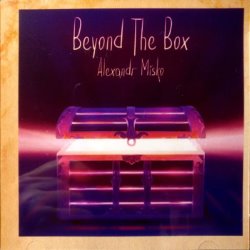
Cover NOT yet available in

Join up for 4K upload/download access
Your Rating (Click a star below)

Track List
01) Forsaken (new version)
02) Caravan
03) Imprisoned (Dubstep Guitar)
04) Yerba Mate
05) Strange Dance
06) Treasured Memory
07) Father's Words
08) Billie Jean
09) Foretaste
10) 4 Days of August
11) Night Owl
12) Wanderer
13) Thunderstorm
14) Careless Whisper
01) Forsaken (new version)
02) Caravan
03) Imprisoned (Dubstep Guitar)
04) Yerba Mate
05) Strange Dance
06) Treasured Memory
07) Father's Words
08) Billie Jean
09) Foretaste
10) 4 Days of August
11) Night Owl
12) Wanderer
13) Thunderstorm
14) Careless Whisper

3:57
3:48
4:05
5:06
3:37
4:19
3:32
3:55
4:25
4:29
4:32
4:30
4:16
4:09
Data Complete 70%
Total Rating
Total Rating
Back Cover
CD Art
3D Case
3D Thumb
3D Flat
3D Face
3D Spine
First Released
 2017
 Instrumental
 ---
 ---
---
 Medium
 Album
35/100
 859724299388
 0 copies
Album Description
Available in:

With Beyond the Box, Russian guitarist and composer Alexandr Misko released his second studio album on December 28, 2017, marking an important milestone in his artistic development. The fourteen tracks, with a total playing time of nearly 59 minutes, combine original compositions with extraordinary arrangements of well-known pop songs. At the center of the album is a contemporary acoustic fingerstyle guitar approach whose tonal possibilities are considerably expanded through alternative tunings, two-handed tapping, percussive techniques, harmonics, and experimental methods of sound production. The album title Beyond the Box symbolizes the departure from conventional musical and instrumental ways of thinking. Misko treats the guitar not exclusively as a melodic and harmonic instrument but as a self-contained musical system capable of simultaneously assuming the roles of bassist, drummer, rhythm guitarist, and soloist.
Alexandr Misko began playing the guitar at the age of twelve and initially received three years of classical guitar instruction. After discovering contemporary fingerstyle techniques through the internet, he continued developing his abilities largely as a self-taught musician. His debut album, The Songs of Adolescence, released in 2016, already attracted attention to his unusual musical language. Beyond the Box documents the further development of this approach, combining the technical achievements of the contemporary fingerstyle movement with personal musical ideas. His innovative guitar arrangements reached an international audience through social media. In 2018, he was named Acoustic Guitarist of the Year in connection with the UK Guitar Show.
Misko opens the album with Forsaken, a revised version of one of his earlier compositions. The title conveys ideas of abandonment, loneliness, and emotional distance. Within contemporary fingerstyle music, the combination of such emotional themes with technically demanding arrangements occupies a particularly important position. Through the combination of resonating open strings, melodically developed upper voices, and nuanced dynamics, the acoustic guitar offers numerous possibilities for creating intensely atmospheric soundscapes. Forsaken represents the personal and emotionally oriented side of Misko’s musical expression. Revisiting an existing composition also demonstrates his interest in reshaping musical ideas through modified arrangements and further-developed playing techniques.
Caravan evokes associations with movement, travel, and encounters with different cultural landscapes. Within instrumental guitar music, the development of rhythmic patterns plays an important role in conveying such impressions. Recurring bass figures, syncopated accompaniment structures, and melodic developments can create a sense of continuous movement. However, the title alone does not justify assigning the piece to a specific Middle Eastern or non-European musical tradition. Within the album’s overall concept, Caravan expands the atmospheric perspective established by Forsaken through the theme of traveling.
Misko pursues a particularly unusual approach with Imprisoned, which was also released under the supplementary title Dubstep Guitar. The composition demonstrates his interest in transferring electronic music styles to the acoustic guitar. Dubstep originally developed within the British electronic music scene and is characterized by prominent bass frequencies, syncopated rhythms, intense dynamic contrasts, and distinctive changes in tonal color.
Transferring such musical characteristics to an acoustic instrument presents considerable technical challenges. Electronically generated percussion sounds and bass structures must be recreated through alternative picking techniques, controlled string muting, percussive movements, and unconventional methods of sound production. Particularly interesting is the question of how the rhythmic and sonic identity of electronic music can be preserved without access to the original electronic instruments. Imprisoned therefore represents a central component of the artistic concept behind Beyond the Box. The composition expands contemporary fingerstyle guitar through elements of modern electronic music culture and demonstrates Misko’s willingness to transcend established instrumental boundaries.
Yerba Mate follows as the longest composition on the album. Its title refers to the traditional South American beverage prepared from the leaves of the yerba mate plant. In Argentina, Paraguay, Uruguay, and Brazil, the communal consumption of mate possesses considerable social and cultural significance. Within the album, the title therefore introduces another geographical and cultural frame of reference.
With a playing time of more than five minutes, Yerba Mate provides a comparatively generous framework for developing musical motifs. Particularly within longer instrumental fingerstyle compositions, the balanced relationship between repetition, variation, and musical development becomes increasingly important. Technical complexity alone is insufficient to establish convincing musical dramaturgy. What matters is the ability to connect individual musical ideas and assign them different functions within the overall composition. Yerba Mate represents Misko’s more expansive compositional perspective, although a specific Latin American genre classification should not be inferred from its title alone.
Strange Dance ranks among the album’s particularly interesting compositions. Misko himself describes the piece as a waltz and regards the guitar, in a sense, as his dance partner. This personal concept illustrates how he connects physical movement, rhythmic organization, and instrumental expression.
Particularly noteworthy is the guitar tuning C♯–G♯–C–F–G♯–C. Compared with conventional standard tuning, this arrangement opens entirely different harmonic and melodic possibilities. The unusual distribution of intervals between the individual strings changes the available chord shapes, fingerings, and resonance relationships. Misko additionally uses a special Harmonic Spider Capo at the twelfth fret of the second and third strings, expanding the tonal spectrum through additional natural harmonic possibilities.
The combination of a traditional European dance form with experimental guitar tunings and contemporary playing techniques makes Strange Dance a particularly characteristic example of Misko’s musical approach. The historical form of the waltz is not simply reproduced but transferred into a contemporary instrumental context. From a music education perspective, the piece is particularly interesting for exploring alternative tunings, triple-meter rhythmic structures, and natural harmonics.
Treasured Memory leads the album’s musical imagination into a more personal and nostalgic dimension. The title refers to a cherished memory and evokes associations with past experiences, personal relationships, and emotionally significant moments. Within Beyond the Box, this theme provides an important contrast to the experimental and technically oriented ideas of other compositions.
Particularly within lyrically oriented guitar music, the relationship between melody, harmonic accompaniment, and musical space possesses considerable significance. Individual notes can achieve an intense emotional effect through their duration, dynamic emphasis, and relationship to other voices. Within the album program, Treasured Memory represents the aspect of Misko’s artistic concept in which personal expression and melodic development become more important than the demonstrative presentation of technical possibilities.
Father’s Words continues the album’s personal themes. The title refers to the words of a father and can be associated with family relationships, life experience, guidance, and memories passed from one generation to another. However, an explicitly documented autobiographical account of the composition’s origins cannot be inferred from the title alone.
Instrumental music possesses particular openness when addressing such themes. Without predetermined lyrics, listeners can connect their own memories and experiences with the musical expression. Because of its immediate dynamic responsiveness, the acoustic guitar is particularly suitable for conveying personal musical impressions. Father’s Words complements the emotional themes of Forsaken and Treasured Memory, further expanding the album’s thematic diversity.
One of the best-known contributions to the release is Billie Jean, Misko’s instrumental arrangement of the pop song originally released on Michael Jackson’s 1982 album Thriller. Because of its distinctive bass line, precise rhythmic structure, and characteristic vocal melody, the original ranks among the most recognizable productions in popular music history.
The particular challenge of a solo guitar arrangement lies in combining the different musical layers of the original on a single instrument. The rhythmically distinctive bass figure must remain recognizable alongside the vocal melody and characteristic accompaniment accents. At the same time, the technical complexity of the arrangement must not compromise the original groove.
The importance of contemporary percussive fingerstyle techniques becomes particularly evident here. By combining bass lines, melodic voice leading, muted string attacks, and percussive sounds produced on the guitar body, an individual guitarist can assume essential functions of an entire band. Misko’s arrangement demonstrates that the recognizability of a pop song does not necessarily depend on its original instrumentation. Instead, the decisive factors are the characteristic rhythmic and melodic features of the musical material.
Billie Jean therefore also possesses considerable educational value. The arrangement provides a reference point for exploring rhythmic independence, syncopated bass figures, percussive articulation, and polyphonic guitar techniques. It additionally demonstrates how an arrangement can be transferred to a single instrument through the careful selection of its most important musical elements.
Foretaste follows as a composition whose origins are particularly closely connected to Misko’s personal relationship with the guitar. He dedicated the piece to his former instrument, an acoustic-classical guitar named Larisa. According to his own account, Foretaste was the final composition he wrote on this instrument before receiving a new guitar. The piece therefore possesses the character of a personal musical farewell.
The guitar tuning specified by Misko is D–G–B–F♯–B or A–D. The internationally used note designation B corresponds to the German note H. This unusual tuning expands the possibilities of resonating chord structures and enables harmonic relationships that would require different or technically more demanding fingerings in standard tuning.
Foretaste also demonstrates the particular significance of the instrument within the compositional process. The acoustic properties of a guitar, including its string tension, resonance, and responsiveness, can directly influence the development of musical ideas. Among contemporary fingerstyle guitarists, alternative tunings frequently emerge not exclusively from theoretical considerations but also from experimental exploration of the instrument’s sound. The connection between personal memory and instrumental sound exploration makes Foretaste a particularly interesting contribution to the album.
4 Days of August refers to a limited period of time and consequently possesses an almost diary-like character. The title evokes associations with personal experiences, summer impressions, and memories of a particular period. A musical composition can transform such experiences into an independent form of expression without relying on specific verbal descriptions.
Particularly noteworthy within the overall structure of the album is the recurring connection between abstract musical ideas and personal themes. While Imprisoned and Billie Jean are more strongly associated with innovative arrangement concepts and rhythmic organization, titles such as Treasured Memory, Father’s Words, Foretaste, and 4 Days of August establish an emotional and potentially autobiographical frame of reference. This diversity prevents Beyond the Box from being understood exclusively as a demonstration of extraordinary guitar techniques.
Night Owl introduces the album’s musical imagination to the realm of nocturnal atmosphere. The English expression describes a person who prefers to remain awake until late at night. It can therefore be associated with tranquility, concentrated activity, creative work, and nighttime pursuits.
For instrumental guitar compositions, such themes provide numerous possibilities for developing atmospheric soundscapes. The deliberate treatment of resonance, dynamics, and musical contrasts can be just as important as harmonic complexity or rhythmic virtuosity. Night Owl complements the more personal and atmospheric aspects of the album and contributes to the diversity of its thematic conception.
Wanderer, listed as Wonderer on Misko’s Bandcamp release, follows as another title associated with traveling, movement, and personal exploration. The different spellings introduce slightly different meanings. While Wanderer describes a traveler or someone who roams from place to place, Wonderer more commonly refers to someone who marvels, reflects, or asks questions.
Both concepts are fundamentally compatible with the open and experimental orientation of Beyond the Box. For Misko, contemporary fingerstyle guitar represents a musical means of expression whose possibilities are not restricted by established stylistic conventions. Different guitar tunings, picking techniques, and forms of musical organization enable the continuous expansion of his compositional vocabulary. The title can therefore be interpreted as part of the broader musical philosophy expressed through the album’s overarching title.
Thunderstorm ranks among the better-known original compositions on the release. Its title refers to a thunderstorm and evokes images of natural forces, increasing tension, dynamic changes, and transitions between tranquility and intense movement. Contemporary percussive fingerstyle guitar offers exceptional possibilities for transferring such natural phenomena into musical forms of expression.
Through different picking and articulation techniques, an acoustic guitar can produce not only harmonically defined sounds but also dry, noise-like, and deeply resonating sonic events. Percussive strikes on the guitar body, muted string movements, and dynamic changes can be employed as musical analogies to natural sounds. The challenge lies in integrating these sonic effects into a convincing compositional context rather than presenting them exclusively as isolated technical effects. Within Beyond the Box, Thunderstorm represents the connection between nature-related imagery and the expanded rhythmic and tonal possibilities of the acoustic guitar.
The album concludes with Careless Whisper, an extraordinary arrangement of the song released in 1984 by George Michael and written together with Andrew Ridgeley. The original is particularly characterized by its distinctive saxophone melody, melancholic atmosphere, and memorable harmonic structure. Misko’s arrangement became an international success on social media, reaching an exceptionally large audience within a short period.
Transferring a song containing one of the most recognizable saxophone melodies in popular music to the acoustic guitar places particular demands on instrumental articulation. While a saxophonist can continuously influence the pitch, tonal color, and volume of a sustained note, a guitar note naturally decays after being played. Techniques such as vibrato, string bending, slides, hammer-ons, and pull-offs can help preserve the characteristic expressiveness of such melodic lines on the guitar.
At the same time, bass movements, harmonic accompaniment, and rhythmic structures must be incorporated into a solo arrangement. The musical challenge consists of combining these different layers in such a way that the melody remains clearly recognizable despite the technical complexity. Careless Whisper demonstrates Misko’s ability to transform familiar popular music into an independent instrumental form of expression. The extraordinary public response to the arrangement contributed considerably to his international recognition.
One of the essential strengths of Beyond the Box lies in its expansion of traditional guitar techniques through contemporary methods of sound production. Unlike conventional fingerpicking arrangements, in which the thumb frequently maintains a continuous bass movement while the remaining fingers develop melody and accompaniment, Misko places considerably more flexible distributions of responsibilities between both hands at the center of his approach.
In addition to its traditional function, the picking hand can generate percussive sounds, while the fretting hand independently articulates notes through hammer-ons, pull-offs, or tapping. Through two-handed tapping, both hands can simultaneously assume different melodic and harmonic responsibilities. The guitar consequently develops characteristics of a polyphonic instrument whose possibilities partially resemble the independent voice leading of a keyboard instrument.
The use of natural harmonics is also particularly significant. These are produced by lightly touching a string at specific nodal points, emphasizing individual partial vibrations. Compared with conventionally fretted notes, harmonics possess a particularly transparent and bell-like tonal character. In combination with percussive sounds, resonating bass strings, and fretted melodic notes, they introduce an additional sonic layer.
Alternative guitar tunings constitute another important component of Misko’s musical concept. While standard tuning E–A–D–G–B–E provides a balanced foundation for different guitar styles, modified tunings can be specifically adapted to the harmonic and melodic requirements of a composition. Certain chords can consequently be realized with less technical effort, while open strings provide additional resonance possibilities.
Strange Dance and Foretaste particularly document Misko’s experimental approach to such tunings. From the perspective of harmonic theory, these examples demonstrate that alternative tunings are not merely a means of technical simplification. They can actively contribute to the development of new musical ideas by introducing unfamiliar interval relationships, chord voicings, and possibilities for melodic movement.
Compared with Michael Hedges, who ranks among the most significant pioneers of contemporary acoustic fingerstyle guitar, Misko expands the experimental guitar tradition particularly through the integration of contemporary popular music and electronic music styles. While Hedges fundamentally developed the acoustic guitar through alternative tunings, harmonic openness, and innovative playing techniques, Misko increasingly applies comparable instrumental principles to musical forms of expression associated with the twenty-first century.
Stylistic similarities also exist with Andy McKee, Antoine Dufour, Erik Mongrain, and Jon Gomm. These guitarists share an interest in expanding traditional instrumental functions through percussive playing techniques, alternative tunings, and polyphonic arrangements. While McKee is particularly known for his melodic and atmospheric compositional approach and Mongrain extensively integrates experimental tapping techniques into his musical work, Misko’s approach possesses a particularly pronounced connection to contemporary popular culture and the recreation of electronic sound structures.
From a music education perspective, Beyond the Box provides numerous interesting reference points for advanced guitarists and guitar teachers. Billie Jean is particularly suitable for exploring rhythmic independence, bass ostinatos, and the simultaneous development of multiple musical voices. Strange Dance provides opportunities to investigate alternative guitar tunings, natural harmonics, and unconventional waltz arrangements. Foretaste demonstrates the relationship between guitar tuning, string resonance, and compositional development.
Imprisoned provides a starting point for investigating the transfer of electronic rhythms and sound structures to acoustic instruments. Thunderstorm offers a perspective on the relationship between percussive sounds and programmatic musical imagery. Careless Whisper, in turn, demonstrates the importance of melodic phrasing and the adaptation of musical forms of expression originally developed for other instruments to the acoustic guitar.
A central educational insight is that technical virtuosity should not be regarded as an independent musical objective. Particularly within complex fingerstyle arrangements, it is essential to balance melodic voices, rhythmic accompaniment, and percussive elements according to their respective musical functions. The ability to execute several complicated movements simultaneously only acquires lasting artistic value when it results in a musically comprehensible and convincing overall structure.
The stylistic classification of Beyond the Box should particularly account for its combination of contemporary fingerstyle techniques and experimental sound concepts. Contemporary Fingerstyle represents the most appropriate overarching genre designation. Percussive Fingerstyle, Experimental Acoustic, Acoustic Fusion, and Acoustic Pop additionally describe important aspects of the release.
An exclusive classification as Acoustic Pop would insufficiently reflect the original compositions and experimental aspects of the album. Similarly, classification as Acoustic Jazz would not be adequately justified despite its harmonic and technical complexity. Misko’s musical identity here emerges primarily from the expansion of acoustic guitar techniques and their application to different contemporary musical forms.
A possible limitation lies in the exceptionally high technical density of certain arrangement concepts. Listeners who exclusively prefer traditional, restrained, or lyrically oriented acoustic guitar music may find the pronounced emphasis on percussive effects and experimental playing techniques less appealing. However, these characteristics constitute an essential component of Misko’s artistic identity and distinguish the album from conventional acoustic guitar productions.
Within his discography, Beyond the Box occupies a particularly important position. While The Songs of Adolescence documented the foundations of his musical development, his second album established his internationally recognized style. The combination of original compositions and arrangements of popular songs enabled him to reach both enthusiasts of sophisticated instrumental music and a broader audience. With the album Roundtrip, released in 2019, he continued his musical development.
Beyond the Box is an innovative, exceptionally technically demanding, and conceptually diverse acoustic guitar album that presents Alexandr Misko as a creative representative of the contemporary fingerstyle movement. Particularly noteworthy are the integration of electronic music concepts in Imprisoned, the unusual guitar tuning and experimental harmonic concept of Strange Dance, the personal origins of Foretaste, and the extraordinary arrangements of Billie Jean and Careless Whisper. Compositions such as Forsaken, Treasured Memory, and Father’s Words expand the experimental orientation of the album through personal and emotionally driven themes.
The artistic significance of the release lies in its consistent expansion of traditional guitar functions and the combination of technical innovation with independent musical ideas. Beyond the Box documents a form of acoustic guitar music that does not exclusively follow established instrumental traditions but explores new possibilities within contemporary musical cultures. A highly recommended album for enthusiasts of contemporary fingerstyle guitar music, experimental acoustic arrangements, and extraordinary instrumental pop interpretations, as well as a challenging source of inspiration for ambitious guitarists and guitar teachers.

User Album Review
None...
External Album Reviews
None...
User Comments

Available in:
With Beyond the Box, Russian guitarist and composer Alexandr Misko released his second studio album on December 28, 2017, marking an important milestone in his artistic development. The fourteen tracks, with a total playing time of nearly 59 minutes, combine original compositions with extraordinary arrangements of well-known pop songs. At the center of the album is a contemporary acoustic fingerstyle guitar approach whose tonal possibilities are considerably expanded through alternative tunings, two-handed tapping, percussive techniques, harmonics, and experimental methods of sound production. The album title Beyond the Box symbolizes the departure from conventional musical and instrumental ways of thinking. Misko treats the guitar not exclusively as a melodic and harmonic instrument but as a self-contained musical system capable of simultaneously assuming the roles of bassist, drummer, rhythm guitarist, and soloist.
Alexandr Misko began playing the guitar at the age of twelve and initially received three years of classical guitar instruction. After discovering contemporary fingerstyle techniques through the internet, he continued developing his abilities largely as a self-taught musician. His debut album, The Songs of Adolescence, released in 2016, already attracted attention to his unusual musical language. Beyond the Box documents the further development of this approach, combining the technical achievements of the contemporary fingerstyle movement with personal musical ideas. His innovative guitar arrangements reached an international audience through social media. In 2018, he was named Acoustic Guitarist of the Year in connection with the UK Guitar Show.
Misko opens the album with Forsaken, a revised version of one of his earlier compositions. The title conveys ideas of abandonment, loneliness, and emotional distance. Within contemporary fingerstyle music, the combination of such emotional themes with technically demanding arrangements occupies a particularly important position. Through the combination of resonating open strings, melodically developed upper voices, and nuanced dynamics, the acoustic guitar offers numerous possibilities for creating intensely atmospheric soundscapes. Forsaken represents the personal and emotionally oriented side of Misko’s musical expression. Revisiting an existing composition also demonstrates his interest in reshaping musical ideas through modified arrangements and further-developed playing techniques.
Caravan evokes associations with movement, travel, and encounters with different cultural landscapes. Within instrumental guitar music, the development of rhythmic patterns plays an important role in conveying such impressions. Recurring bass figures, syncopated accompaniment structures, and melodic developments can create a sense of continuous movement. However, the title alone does not justify assigning the piece to a specific Middle Eastern or non-European musical tradition. Within the album’s overall concept, Caravan expands the atmospheric perspective established by Forsaken through the theme of traveling.
Misko pursues a particularly unusual approach with Imprisoned, which was also released under the supplementary title Dubstep Guitar. The composition demonstrates his interest in transferring electronic music styles to the acoustic guitar. Dubstep originally developed within the British electronic music scene and is characterized by prominent bass frequencies, syncopated rhythms, intense dynamic contrasts, and distinctive changes in tonal color.
Transferring such musical characteristics to an acoustic instrument presents considerable technical challenges. Electronically generated percussion sounds and bass structures must be recreated through alternative picking techniques, controlled string muting, percussive movements, and unconventional methods of sound production. Particularly interesting is the question of how the rhythmic and sonic identity of electronic music can be preserved without access to the original electronic instruments. Imprisoned therefore represents a central component of the artistic concept behind Beyond the Box. The composition expands contemporary fingerstyle guitar through elements of modern electronic music culture and demonstrates Misko’s willingness to transcend established instrumental boundaries.
Yerba Mate follows as the longest composition on the album. Its title refers to the traditional South American beverage prepared from the leaves of the yerba mate plant. In Argentina, Paraguay, Uruguay, and Brazil, the communal consumption of mate possesses considerable social and cultural significance. Within the album, the title therefore introduces another geographical and cultural frame of reference.
With a playing time of more than five minutes, Yerba Mate provides a comparatively generous framework for developing musical motifs. Particularly within longer instrumental fingerstyle compositions, the balanced relationship between repetition, variation, and musical development becomes increasingly important. Technical complexity alone is insufficient to establish convincing musical dramaturgy. What matters is the ability to connect individual musical ideas and assign them different functions within the overall composition. Yerba Mate represents Misko’s more expansive compositional perspective, although a specific Latin American genre classification should not be inferred from its title alone.
Strange Dance ranks among the album’s particularly interesting compositions. Misko himself describes the piece as a waltz and regards the guitar, in a sense, as his dance partner. This personal concept illustrates how he connects physical movement, rhythmic organization, and instrumental expression.
Particularly noteworthy is the guitar tuning C♯–G♯–C–F–G♯–C. Compared with conventional standard tuning, this arrangement opens entirely different harmonic and melodic possibilities. The unusual distribution of intervals between the individual strings changes the available chord shapes, fingerings, and resonance relationships. Misko additionally uses a special Harmonic Spider Capo at the twelfth fret of the second and third strings, expanding the tonal spectrum through additional natural harmonic possibilities.
The combination of a traditional European dance form with experimental guitar tunings and contemporary playing techniques makes Strange Dance a particularly characteristic example of Misko’s musical approach. The historical form of the waltz is not simply reproduced but transferred into a contemporary instrumental context. From a music education perspective, the piece is particularly interesting for exploring alternative tunings, triple-meter rhythmic structures, and natural harmonics.
Treasured Memory leads the album’s musical imagination into a more personal and nostalgic dimension. The title refers to a cherished memory and evokes associations with past experiences, personal relationships, and emotionally significant moments. Within Beyond the Box, this theme provides an important contrast to the experimental and technically oriented ideas of other compositions.
Particularly within lyrically oriented guitar music, the relationship between melody, harmonic accompaniment, and musical space possesses considerable significance. Individual notes can achieve an intense emotional effect through their duration, dynamic emphasis, and relationship to other voices. Within the album program, Treasured Memory represents the aspect of Misko’s artistic concept in which personal expression and melodic development become more important than the demonstrative presentation of technical possibilities.
Father’s Words continues the album’s personal themes. The title refers to the words of a father and can be associated with family relationships, life experience, guidance, and memories passed from one generation to another. However, an explicitly documented autobiographical account of the composition’s origins cannot be inferred from the title alone.
Instrumental music possesses particular openness when addressing such themes. Without predetermined lyrics, listeners can connect their own memories and experiences with the musical expression. Because of its immediate dynamic responsiveness, the acoustic guitar is particularly suitable for conveying personal musical impressions. Father’s Words complements the emotional themes of Forsaken and Treasured Memory, further expanding the album’s thematic diversity.
One of the best-known contributions to the release is Billie Jean, Misko’s instrumental arrangement of the pop song originally released on Michael Jackson’s 1982 album Thriller. Because of its distinctive bass line, precise rhythmic structure, and characteristic vocal melody, the original ranks among the most recognizable productions in popular music history.
The particular challenge of a solo guitar arrangement lies in combining the different musical layers of the original on a single instrument. The rhythmically distinctive bass figure must remain recognizable alongside the vocal melody and characteristic accompaniment accents. At the same time, the technical complexity of the arrangement must not compromise the original groove.
The importance of contemporary percussive fingerstyle techniques becomes particularly evident here. By combining bass lines, melodic voice leading, muted string attacks, and percussive sounds produced on the guitar body, an individual guitarist can assume essential functions of an entire band. Misko’s arrangement demonstrates that the recognizability of a pop song does not necessarily depend on its original instrumentation. Instead, the decisive factors are the characteristic rhythmic and melodic features of the musical material.
Billie Jean therefore also possesses considerable educational value. The arrangement provides a reference point for exploring rhythmic independence, syncopated bass figures, percussive articulation, and polyphonic guitar techniques. It additionally demonstrates how an arrangement can be transferred to a single instrument through the careful selection of its most important musical elements.
Foretaste follows as a composition whose origins are particularly closely connected to Misko’s personal relationship with the guitar. He dedicated the piece to his former instrument, an acoustic-classical guitar named Larisa. According to his own account, Foretaste was the final composition he wrote on this instrument before receiving a new guitar. The piece therefore possesses the character of a personal musical farewell.
The guitar tuning specified by Misko is D–G–B–F♯–B or A–D. The internationally used note designation B corresponds to the German note H. This unusual tuning expands the possibilities of resonating chord structures and enables harmonic relationships that would require different or technically more demanding fingerings in standard tuning.
Foretaste also demonstrates the particular significance of the instrument within the compositional process. The acoustic properties of a guitar, including its string tension, resonance, and responsiveness, can directly influence the development of musical ideas. Among contemporary fingerstyle guitarists, alternative tunings frequently emerge not exclusively from theoretical considerations but also from experimental exploration of the instrument’s sound. The connection between personal memory and instrumental sound exploration makes Foretaste a particularly interesting contribution to the album.
4 Days of August refers to a limited period of time and consequently possesses an almost diary-like character. The title evokes associations with personal experiences, summer impressions, and memories of a particular period. A musical composition can transform such experiences into an independent form of expression without relying on specific verbal descriptions.
Particularly noteworthy within the overall structure of the album is the recurring connection between abstract musical ideas and personal themes. While Imprisoned and Billie Jean are more strongly associated with innovative arrangement concepts and rhythmic organization, titles such as Treasured Memory, Father’s Words, Foretaste, and 4 Days of August establish an emotional and potentially autobiographical frame of reference. This diversity prevents Beyond the Box from being understood exclusively as a demonstration of extraordinary guitar techniques.
Night Owl introduces the album’s musical imagination to the realm of nocturnal atmosphere. The English expression describes a person who prefers to remain awake until late at night. It can therefore be associated with tranquility, concentrated activity, creative work, and nighttime pursuits.
For instrumental guitar compositions, such themes provide numerous possibilities for developing atmospheric soundscapes. The deliberate treatment of resonance, dynamics, and musical contrasts can be just as important as harmonic complexity or rhythmic virtuosity. Night Owl complements the more personal and atmospheric aspects of the album and contributes to the diversity of its thematic conception.
Wanderer, listed as Wonderer on Misko’s Bandcamp release, follows as another title associated with traveling, movement, and personal exploration. The different spellings introduce slightly different meanings. While Wanderer describes a traveler or someone who roams from place to place, Wonderer more commonly refers to someone who marvels, reflects, or asks questions.
Both concepts are fundamentally compatible with the open and experimental orientation of Beyond the Box. For Misko, contemporary fingerstyle guitar represents a musical means of expression whose possibilities are not restricted by established stylistic conventions. Different guitar tunings, picking techniques, and forms of musical organization enable the continuous expansion of his compositional vocabulary. The title can therefore be interpreted as part of the broader musical philosophy expressed through the album’s overarching title.
Thunderstorm ranks among the better-known original compositions on the release. Its title refers to a thunderstorm and evokes images of natural forces, increasing tension, dynamic changes, and transitions between tranquility and intense movement. Contemporary percussive fingerstyle guitar offers exceptional possibilities for transferring such natural phenomena into musical forms of expression.
Through different picking and articulation techniques, an acoustic guitar can produce not only harmonically defined sounds but also dry, noise-like, and deeply resonating sonic events. Percussive strikes on the guitar body, muted string movements, and dynamic changes can be employed as musical analogies to natural sounds. The challenge lies in integrating these sonic effects into a convincing compositional context rather than presenting them exclusively as isolated technical effects. Within Beyond the Box, Thunderstorm represents the connection between nature-related imagery and the expanded rhythmic and tonal possibilities of the acoustic guitar.
The album concludes with Careless Whisper, an extraordinary arrangement of the song released in 1984 by George Michael and written together with Andrew Ridgeley. The original is particularly characterized by its distinctive saxophone melody, melancholic atmosphere, and memorable harmonic structure. Misko’s arrangement became an international success on social media, reaching an exceptionally large audience within a short period.
Transferring a song containing one of the most recognizable saxophone melodies in popular music to the acoustic guitar places particular demands on instrumental articulation. While a saxophonist can continuously influence the pitch, tonal color, and volume of a sustained note, a guitar note naturally decays after being played. Techniques such as vibrato, string bending, slides, hammer-ons, and pull-offs can help preserve the characteristic expressiveness of such melodic lines on the guitar.
At the same time, bass movements, harmonic accompaniment, and rhythmic structures must be incorporated into a solo arrangement. The musical challenge consists of combining these different layers in such a way that the melody remains clearly recognizable despite the technical complexity. Careless Whisper demonstrates Misko’s ability to transform familiar popular music into an independent instrumental form of expression. The extraordinary public response to the arrangement contributed considerably to his international recognition.
One of the essential strengths of Beyond the Box lies in its expansion of traditional guitar techniques through contemporary methods of sound production. Unlike conventional fingerpicking arrangements, in which the thumb frequently maintains a continuous bass movement while the remaining fingers develop melody and accompaniment, Misko places considerably more flexible distributions of responsibilities between both hands at the center of his approach.
In addition to its traditional function, the picking hand can generate percussive sounds, while the fretting hand independently articulates notes through hammer-ons, pull-offs, or tapping. Through two-handed tapping, both hands can simultaneously assume different melodic and harmonic responsibilities. The guitar consequently develops characteristics of a polyphonic instrument whose possibilities partially resemble the independent voice leading of a keyboard instrument.
The use of natural harmonics is also particularly significant. These are produced by lightly touching a string at specific nodal points, emphasizing individual partial vibrations. Compared with conventionally fretted notes, harmonics possess a particularly transparent and bell-like tonal character. In combination with percussive sounds, resonating bass strings, and fretted melodic notes, they introduce an additional sonic layer.
Alternative guitar tunings constitute another important component of Misko’s musical concept. While standard tuning E–A–D–G–B–E provides a balanced foundation for different guitar styles, modified tunings can be specifically adapted to the harmonic and melodic requirements of a composition. Certain chords can consequently be realized with less technical effort, while open strings provide additional resonance possibilities.
Strange Dance and Foretaste particularly document Misko’s experimental approach to such tunings. From the perspective of harmonic theory, these examples demonstrate that alternative tunings are not merely a means of technical simplification. They can actively contribute to the development of new musical ideas by introducing unfamiliar interval relationships, chord voicings, and possibilities for melodic movement.
Compared with Michael Hedges, who ranks among the most significant pioneers of contemporary acoustic fingerstyle guitar, Misko expands the experimental guitar tradition particularly through the integration of contemporary popular music and electronic music styles. While Hedges fundamentally developed the acoustic guitar through alternative tunings, harmonic openness, and innovative playing techniques, Misko increasingly applies comparable instrumental principles to musical forms of expression associated with the twenty-first century.
Stylistic similarities also exist with Andy McKee, Antoine Dufour, Erik Mongrain, and Jon Gomm. These guitarists share an interest in expanding traditional instrumental functions through percussive playing techniques, alternative tunings, and polyphonic arrangements. While McKee is particularly known for his melodic and atmospheric compositional approach and Mongrain extensively integrates experimental tapping techniques into his musical work, Misko’s approach possesses a particularly pronounced connection to contemporary popular culture and the recreation of electronic sound structures.
From a music education perspective, Beyond the Box provides numerous interesting reference points for advanced guitarists and guitar teachers. Billie Jean is particularly suitable for exploring rhythmic independence, bass ostinatos, and the simultaneous development of multiple musical voices. Strange Dance provides opportunities to investigate alternative guitar tunings, natural harmonics, and unconventional waltz arrangements. Foretaste demonstrates the relationship between guitar tuning, string resonance, and compositional development.
Imprisoned provides a starting point for investigating the transfer of electronic rhythms and sound structures to acoustic instruments. Thunderstorm offers a perspective on the relationship between percussive sounds and programmatic musical imagery. Careless Whisper, in turn, demonstrates the importance of melodic phrasing and the adaptation of musical forms of expression originally developed for other instruments to the acoustic guitar.
A central educational insight is that technical virtuosity should not be regarded as an independent musical objective. Particularly within complex fingerstyle arrangements, it is essential to balance melodic voices, rhythmic accompaniment, and percussive elements according to their respective musical functions. The ability to execute several complicated movements simultaneously only acquires lasting artistic value when it results in a musically comprehensible and convincing overall structure.
The stylistic classification of Beyond the Box should particularly account for its combination of contemporary fingerstyle techniques and experimental sound concepts. Contemporary Fingerstyle represents the most appropriate overarching genre designation. Percussive Fingerstyle, Experimental Acoustic, Acoustic Fusion, and Acoustic Pop additionally describe important aspects of the release.
An exclusive classification as Acoustic Pop would insufficiently reflect the original compositions and experimental aspects of the album. Similarly, classification as Acoustic Jazz would not be adequately justified despite its harmonic and technical complexity. Misko’s musical identity here emerges primarily from the expansion of acoustic guitar techniques and their application to different contemporary musical forms.
A possible limitation lies in the exceptionally high technical density of certain arrangement concepts. Listeners who exclusively prefer traditional, restrained, or lyrically oriented acoustic guitar music may find the pronounced emphasis on percussive effects and experimental playing techniques less appealing. However, these characteristics constitute an essential component of Misko’s artistic identity and distinguish the album from conventional acoustic guitar productions.
Within his discography, Beyond the Box occupies a particularly important position. While The Songs of Adolescence documented the foundations of his musical development, his second album established his internationally recognized style. The combination of original compositions and arrangements of popular songs enabled him to reach both enthusiasts of sophisticated instrumental music and a broader audience. With the album Roundtrip, released in 2019, he continued his musical development.
Beyond the Box is an innovative, exceptionally technically demanding, and conceptually diverse acoustic guitar album that presents Alexandr Misko as a creative representative of the contemporary fingerstyle movement. Particularly noteworthy are the integration of electronic music concepts in Imprisoned, the unusual guitar tuning and experimental harmonic concept of Strange Dance, the personal origins of Foretaste, and the extraordinary arrangements of Billie Jean and Careless Whisper. Compositions such as Forsaken, Treasured Memory, and Father’s Words expand the experimental orientation of the album through personal and emotionally driven themes.
The artistic significance of the release lies in its consistent expansion of traditional guitar functions and the combination of technical innovation with independent musical ideas. Beyond the Box documents a form of acoustic guitar music that does not exclusively follow established instrumental traditions but explores new possibilities within contemporary musical cultures. A highly recommended album for enthusiasts of contemporary fingerstyle guitar music, experimental acoustic arrangements, and extraordinary instrumental pop interpretations, as well as a challenging source of inspiration for ambitious guitarists and guitar teachers.
User Album Review
None...
External Album Reviews
None...
User Comments
No comments yet...
Status
 unlocked
External Links


