 (0 users)


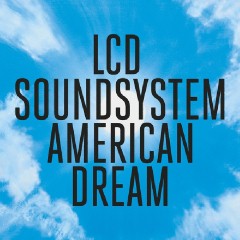
Cover NOT yet available in

Join up for 4K upload/download access
Your Rating (Click a star below)

Track List
01) Oh Baby
02) Other Voices
03) I Used To
04) Change Yr Mind
05) How Do You Sleep?
06) Tonite
07) Call the Police
08) American Dream
09) Emotional Haircut
10) Black Screen
01) Oh Baby
02) Other Voices
03) I Used To
04) Change Yr Mind
05) How Do You Sleep?
06) Tonite
07) Call the Police
08) American Dream
09) Emotional Haircut
10) Black Screen
5:49
6:43
5:32
4:57
9:12
5:47
6:58
6:06
5:29
12:05
Data Complete 80%
Total Rating
Total Rating
 (4 users)
Back Cover
CD Art
3D Case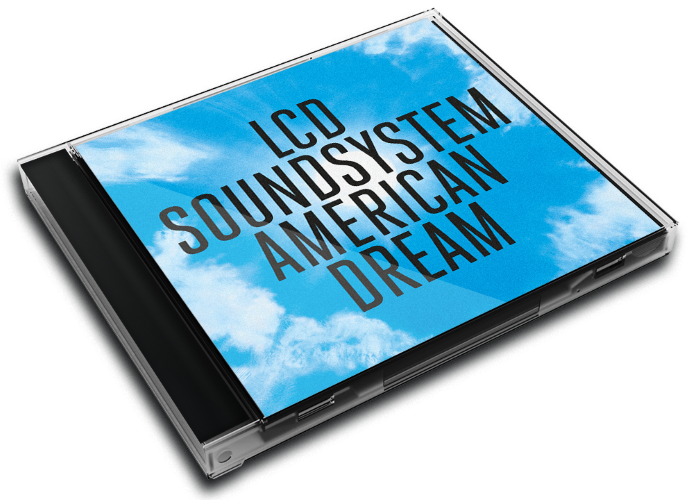
3D Thumb
3D Flat
3D Face
3D Spine
First Released


 2017
2017
 Electronic
 Passionate
 Electronic
---
 Medium
 Album
Album
 ---
---
 ---
---
 0 copies
Album Description
Available in:

American Dream (2017) est le quatrième album studio de LCD Soundsystem, marquant le retour du groupe après une séparation de près de cinq ans.
Publié par les labels DFA et Columbia, cet opus a été enregistré sur une période de 18 mois dans plusieurs lieux, incluant les studios DFA à New York ainsi que des sessions à Londres et Portland.
Musicalement, le disque fusionne dance-punk, new wave, post-punk et synthpop, une esthétique souvent comparée à la « Trilogie berlinoise » de David Bowie. Porté par les singles « Call the Police » et « Tonite », l'album a atteint la première place des charts aux États-Unis, au Canada et au Portugal, tout en recevant des nominations aux Grammy Awards pour le meilleur album de musique alternative.
Thématiquement, James Murphy y explore la dépression, les enjeux sociaux et le deuil, notamment à travers le titre final « Black Screen », conçu comme un hommage à Bowie.
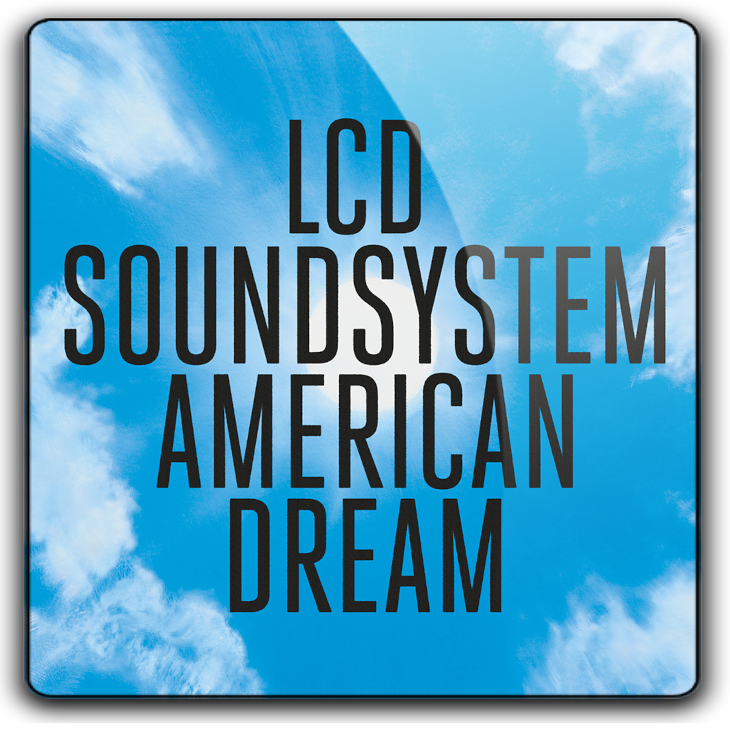
La pochette présente une peinture intitulée UP de l'artiste Robert Reynolds.

User Album Review
f course James Murphy fell for his own rock’n’roll myth. This is the guy who entered the realm of semi-stardom 15 years ago with “Losing My Edge,” a song that both poked fun at and paid tribute to music snobbery, that imagined a miracle man who witnessed every “seminal” underground event up-close, that used a list of cooler-than-thou names as an impenetrable shield. It made sense for him to concoct his very own “I was there” moment on April 2, 2011, when LCD Soundsystem played what was billed as their final show at the most storied venue in New York City. It was instantly legendary, the underdog’s big day. A perfect ending. Too perfect, maybe.
As an ace student of the game—“LCD is a band about a band writing music about writing music,” he once quipped—Murphy knew that he couldn’t just reunite for a lucrative victory lap, playing his most popular songs on Spotify to the genre-agnostic, dance-friendly demographic he helped cultivate throughout the 2000s. It would ruin the legacy and go against everything LCD stood for: integrity, respect, a sly but genuine love of just how much music can shape a human being’s identity. So even though a new album was always planned since the band officially reformed 20 months ago, the intervening hit-filled gigs could feel odd. Yes, they sounded great, and all the members looked excited to be playing together again, but the context was tweaked. LCD Soundsystem were no longer on the cusp of a cultish zeitgeist. Murphy still sang “this could be the last time” during “All My Friends,” though the line’s tang of finality was dulled.
For his part, Murphy recently promised to never make a show of LCD’s retirement ever again. But as much as the band’s fourth album, American Dream, marks a rebirth, it’s also obsessed with endings: of friendships, of love, of heroes, of a certain type of geeky fandom, of the American dream itself. These are big, serious topics for a project that essentially started as a goof, but it’s the direction Murphy has taken since Sound of Silver’s “Someone Great” combined his affection for bubbling synths with a poignancy about the fleeting nature of life. Now, as a 47-year-old father of a young child, Murphy is using his long-running affection for bygone post-punk and art-rock sounds to carry on traditions; the album includes pointed references to Lou Reed, Leonard Cohen, Suicide’s Alan Vega, and David Bowie, all of whom passed in the years since LCD’s last record. Whereas Murphy once took on all of these influences lightly and cleverly, they feel heavier across much of American Dream’s 70 minutes, with the lingering responsibilities of a disappearing history becoming more apparent.
On paper, that might sound like a bit of a slog, but this is not the case. Roughly half of the album is buoyed by the twitching rhythms and spirited mumble-rants that Murphy, who once again plays the vast majority of the instruments himself, is known for. Soon-to-be live scorcher “Emotional Haircut” is ostensibly a lark about an old rocker dude trying to cling onto some youth by-way-of a trendy new ’do—but it doesn’t stop with the easy joke. The song’s intensity comes from Murphy’s identification with this character who absorbs pummelling frequencies at very high volumes in order to quell the anxieties of aging. “You got numbers on your phone of the dead that you can’t delete,” he yelps as the music notches up to a panic. “And you got life-affirming moments in your past that you can’t repeat.” It’s at once funny, terrifying, and strangely reassuring.
A similar emotional brew rumbles through the burbling “Tonite,” which reads like an updated treatise in defense of a certain type of outmoded music nerd—or, as Murphy oh-so-knowingly puts it, “a hobbled veteran of the disc-shop inquisition sent to parry the cocksure mem-stick filth with my own late-era middle-aged ramblings.” It’s a pep talk for those who’ve felt duped by late capitalism’s gobbling up of punk values in the name of branding and moneyed elitism. Sure, this might be easy for James Murphy to say—as a Coachella headliner and Williamsburg wine bar owner, he’s not exactly in the DIY trenches—but, as music recedes ever further into the background of popular culture, such bemused wishful thinking can’t hurt. Fandom comes up again on “Change Yr Mind,” where Murphy wades into comment sections, both parroting and rebuffing those who doubted the return of LCD Soundsystem. After a litany of taunts and self-doubt elbowed between Robert Fripp-style guitar shocks, the singer comes to a simple epiphany: “You can change your mind,” he repeats, as the static track cracks open. This is the freeing sound of losing followers.
The idea of change, and whether or not it’s truly possible, has been a recurring theme for Murphy, and American Dream has him taking some legitimate steps away from his renowned style. While the album’s classic-sounding LCD tracks are comfortably familiar, they can also feel redundant, unnecessary reminders that struggle to supplant Murphy’s own past glories. So the record’s newfangled moves don’t just offer variety, they provide American Dream’s most rewarding moments and serve as the best justifications of this reformed group’s continued existence.
Take album opener “Oh Baby,” Murphy’s attempt at the type of unsettlingly pretty tick-tick slow burner that turned Suicide into subversive NYC icons. The song is decidedly mid-tempo. And Murphy isn’t rambling here—he’s crooning. Very convincingly. Sexily, even. It’s a breakup song (Murphy went through a divorce around the time LCD disbanded in 2011) stuck somewhere between a bad dream and reality. And unlike so many LCD songs, which are marked by the hyper-specificity of an obsessive-compulsive creator, “Oh Baby” feels spacious and inviting. You don’t have to be a laid-off record store clerk to fully understand this song’s intricacies. Like Suicide’s “Dream Baby Dream,” which has been covered by everyone from Bruce Springsteen to Neneh Cherry, “Oh Baby” is the type of track could be successfully pulled off by creep-show genius Ariel Pink or Rat Pack redux Michael Bublé.
Murphy keeps dreaming on “I Used To,” another winning outlier. He seems to be peeking through to the past, to his formative rock influences, trying to confront their mysterious force. The searching song is brought further into focus by its stalking bassline and hulking, unfussy drum beat—turn your ear the right way, and this is what a Led Zeppelin post-punk album could have sounded like, with a stinging guitar solo coming halfway from hell. Staying in this more diabolical lane, the nearly 10-minute centerpiece “How Do You Sleep?” is tempestuous, ecstatic, and utterly, utterly savage. Sharing a name with John Lennon’s infamous 1971 takedown of Paul McCartney following the dissolution of the Beatles, the song is almost certainly a salvo aimed at Murphy’s estranged DFA production partner, Tim Goldsworthy—aka the guy Murphy’s label sued for nearly $100,000 in missing funds in 2013, aka the guy who called Murphy an over-therapized bully and a sociopath, and admitted to having “weird reoccurring dreams of ‘Game of Thrones’-style deaths for him” in the recent New York rock oral history Meet Me in the Bathroom. So, yeah. These two men no longer like each other.
For all the bad blood, though, “How Do You Sleep?” is not a guns-out rocker or a punch line-stuffed lyrical skewering. It’s painstaking in its build, amassing ominous percussion and gargantuan bass synth tones before the full rhythm finally straps in after more than five minutes. Meanwhile, Murphy mixes enigmatic taunts with more direct swipes, hollering from deep in the mix: “I must admit: I miss the laughing/But not so much you.” This is venom, but it’s expertly controlled venom. The song works astoundingly well without any backstory, as a universal, fist-pumping broadside directed at former friends everywhere, but it’s even more damning with its likely target in mind. You almost feel pity for Goldsworthy—but then the beat connects and, well, he must have done something wrong to deserve such an epic shaming. And still, there is a bittersweet element in acknowledging the loss of someone who’s still living, a haunting presence no longer felt.
Another ghost inhabits the album’s final track, “Black Screen,” but the situation is flipped: The person is no longer alive yet they are sorely missed. No name is mentioned in the song, but there is reason to believe it is a belated message for David Bowie, who befriended and collaborated with Murphy in the last few years of his life. In fact, Murphy was once considered to be a co-producer on Bowie’s final album, Blackstar, though in the end he only officially contributed percussion to a couple of tracks. Since some of LCD Soundsystem’s best tracks have been thinly disguised love letters to Bowie’s influence, why didn’t Murphy fully take the chance to work with one of his deepest musical loves? “Black Screen” gives us some answers. “I had fear in the room,” Murphy sings in his smallest voice, “so I stopped turning up.” This is not a flip comment; it is sorrowful. Regretful. Painfully vulnerable. The song glides along a straightforward sonar-blip beat, with Murphy recalling his relationship with his idol in quiet awe, eventually conjuring an image of interstellar infinity. It concludes with pulses and piano that would not sound out-of-place on the dark side of a Bowie art-rock opus—an ending that could go on forever.
SOURCE: https://pitchfork.com/reviews/albums/lcd-soundsystem-american-dream/
External Album Reviews
None...
User Comments

Available in:
American Dream (2017) est le quatrième album studio de LCD Soundsystem, marquant le retour du groupe après une séparation de près de cinq ans.
Publié par les labels DFA et Columbia, cet opus a été enregistré sur une période de 18 mois dans plusieurs lieux, incluant les studios DFA à New York ainsi que des sessions à Londres et Portland.
Musicalement, le disque fusionne dance-punk, new wave, post-punk et synthpop, une esthétique souvent comparée à la « Trilogie berlinoise » de David Bowie. Porté par les singles « Call the Police » et « Tonite », l'album a atteint la première place des charts aux États-Unis, au Canada et au Portugal, tout en recevant des nominations aux Grammy Awards pour le meilleur album de musique alternative.
Thématiquement, James Murphy y explore la dépression, les enjeux sociaux et le deuil, notamment à travers le titre final « Black Screen », conçu comme un hommage à Bowie.
La pochette présente une peinture intitulée UP de l'artiste Robert Reynolds.
User Album Review
f course James Murphy fell for his own rock’n’roll myth. This is the guy who entered the realm of semi-stardom 15 years ago with “Losing My Edge,” a song that both poked fun at and paid tribute to music snobbery, that imagined a miracle man who witnessed every “seminal” underground event up-close, that used a list of cooler-than-thou names as an impenetrable shield. It made sense for him to concoct his very own “I was there” moment on April 2, 2011, when LCD Soundsystem played what was billed as their final show at the most storied venue in New York City. It was instantly legendary, the underdog’s big day. A perfect ending. Too perfect, maybe.
As an ace student of the game—“LCD is a band about a band writing music about writing music,” he once quipped—Murphy knew that he couldn’t just reunite for a lucrative victory lap, playing his most popular songs on Spotify to the genre-agnostic, dance-friendly demographic he helped cultivate throughout the 2000s. It would ruin the legacy and go against everything LCD stood for: integrity, respect, a sly but genuine love of just how much music can shape a human being’s identity. So even though a new album was always planned since the band officially reformed 20 months ago, the intervening hit-filled gigs could feel odd. Yes, they sounded great, and all the members looked excited to be playing together again, but the context was tweaked. LCD Soundsystem were no longer on the cusp of a cultish zeitgeist. Murphy still sang “this could be the last time” during “All My Friends,” though the line’s tang of finality was dulled.
For his part, Murphy recently promised to never make a show of LCD’s retirement ever again. But as much as the band’s fourth album, American Dream, marks a rebirth, it’s also obsessed with endings: of friendships, of love, of heroes, of a certain type of geeky fandom, of the American dream itself. These are big, serious topics for a project that essentially started as a goof, but it’s the direction Murphy has taken since Sound of Silver’s “Someone Great” combined his affection for bubbling synths with a poignancy about the fleeting nature of life. Now, as a 47-year-old father of a young child, Murphy is using his long-running affection for bygone post-punk and art-rock sounds to carry on traditions; the album includes pointed references to Lou Reed, Leonard Cohen, Suicide’s Alan Vega, and David Bowie, all of whom passed in the years since LCD’s last record. Whereas Murphy once took on all of these influences lightly and cleverly, they feel heavier across much of American Dream’s 70 minutes, with the lingering responsibilities of a disappearing history becoming more apparent.
On paper, that might sound like a bit of a slog, but this is not the case. Roughly half of the album is buoyed by the twitching rhythms and spirited mumble-rants that Murphy, who once again plays the vast majority of the instruments himself, is known for. Soon-to-be live scorcher “Emotional Haircut” is ostensibly a lark about an old rocker dude trying to cling onto some youth by-way-of a trendy new ’do—but it doesn’t stop with the easy joke. The song’s intensity comes from Murphy’s identification with this character who absorbs pummelling frequencies at very high volumes in order to quell the anxieties of aging. “You got numbers on your phone of the dead that you can’t delete,” he yelps as the music notches up to a panic. “And you got life-affirming moments in your past that you can’t repeat.” It’s at once funny, terrifying, and strangely reassuring.
A similar emotional brew rumbles through the burbling “Tonite,” which reads like an updated treatise in defense of a certain type of outmoded music nerd—or, as Murphy oh-so-knowingly puts it, “a hobbled veteran of the disc-shop inquisition sent to parry the cocksure mem-stick filth with my own late-era middle-aged ramblings.” It’s a pep talk for those who’ve felt duped by late capitalism’s gobbling up of punk values in the name of branding and moneyed elitism. Sure, this might be easy for James Murphy to say—as a Coachella headliner and Williamsburg wine bar owner, he’s not exactly in the DIY trenches—but, as music recedes ever further into the background of popular culture, such bemused wishful thinking can’t hurt. Fandom comes up again on “Change Yr Mind,” where Murphy wades into comment sections, both parroting and rebuffing those who doubted the return of LCD Soundsystem. After a litany of taunts and self-doubt elbowed between Robert Fripp-style guitar shocks, the singer comes to a simple epiphany: “You can change your mind,” he repeats, as the static track cracks open. This is the freeing sound of losing followers.
The idea of change, and whether or not it’s truly possible, has been a recurring theme for Murphy, and American Dream has him taking some legitimate steps away from his renowned style. While the album’s classic-sounding LCD tracks are comfortably familiar, they can also feel redundant, unnecessary reminders that struggle to supplant Murphy’s own past glories. So the record’s newfangled moves don’t just offer variety, they provide American Dream’s most rewarding moments and serve as the best justifications of this reformed group’s continued existence.
Take album opener “Oh Baby,” Murphy’s attempt at the type of unsettlingly pretty tick-tick slow burner that turned Suicide into subversive NYC icons. The song is decidedly mid-tempo. And Murphy isn’t rambling here—he’s crooning. Very convincingly. Sexily, even. It’s a breakup song (Murphy went through a divorce around the time LCD disbanded in 2011) stuck somewhere between a bad dream and reality. And unlike so many LCD songs, which are marked by the hyper-specificity of an obsessive-compulsive creator, “Oh Baby” feels spacious and inviting. You don’t have to be a laid-off record store clerk to fully understand this song’s intricacies. Like Suicide’s “Dream Baby Dream,” which has been covered by everyone from Bruce Springsteen to Neneh Cherry, “Oh Baby” is the type of track could be successfully pulled off by creep-show genius Ariel Pink or Rat Pack redux Michael Bublé.
Murphy keeps dreaming on “I Used To,” another winning outlier. He seems to be peeking through to the past, to his formative rock influences, trying to confront their mysterious force. The searching song is brought further into focus by its stalking bassline and hulking, unfussy drum beat—turn your ear the right way, and this is what a Led Zeppelin post-punk album could have sounded like, with a stinging guitar solo coming halfway from hell. Staying in this more diabolical lane, the nearly 10-minute centerpiece “How Do You Sleep?” is tempestuous, ecstatic, and utterly, utterly savage. Sharing a name with John Lennon’s infamous 1971 takedown of Paul McCartney following the dissolution of the Beatles, the song is almost certainly a salvo aimed at Murphy’s estranged DFA production partner, Tim Goldsworthy—aka the guy Murphy’s label sued for nearly $100,000 in missing funds in 2013, aka the guy who called Murphy an over-therapized bully and a sociopath, and admitted to having “weird reoccurring dreams of ‘Game of Thrones’-style deaths for him” in the recent New York rock oral history Meet Me in the Bathroom. So, yeah. These two men no longer like each other.
For all the bad blood, though, “How Do You Sleep?” is not a guns-out rocker or a punch line-stuffed lyrical skewering. It’s painstaking in its build, amassing ominous percussion and gargantuan bass synth tones before the full rhythm finally straps in after more than five minutes. Meanwhile, Murphy mixes enigmatic taunts with more direct swipes, hollering from deep in the mix: “I must admit: I miss the laughing/But not so much you.” This is venom, but it’s expertly controlled venom. The song works astoundingly well without any backstory, as a universal, fist-pumping broadside directed at former friends everywhere, but it’s even more damning with its likely target in mind. You almost feel pity for Goldsworthy—but then the beat connects and, well, he must have done something wrong to deserve such an epic shaming. And still, there is a bittersweet element in acknowledging the loss of someone who’s still living, a haunting presence no longer felt.
Another ghost inhabits the album’s final track, “Black Screen,” but the situation is flipped: The person is no longer alive yet they are sorely missed. No name is mentioned in the song, but there is reason to believe it is a belated message for David Bowie, who befriended and collaborated with Murphy in the last few years of his life. In fact, Murphy was once considered to be a co-producer on Bowie’s final album, Blackstar, though in the end he only officially contributed percussion to a couple of tracks. Since some of LCD Soundsystem’s best tracks have been thinly disguised love letters to Bowie’s influence, why didn’t Murphy fully take the chance to work with one of his deepest musical loves? “Black Screen” gives us some answers. “I had fear in the room,” Murphy sings in his smallest voice, “so I stopped turning up.” This is not a flip comment; it is sorrowful. Regretful. Painfully vulnerable. The song glides along a straightforward sonar-blip beat, with Murphy recalling his relationship with his idol in quiet awe, eventually conjuring an image of interstellar infinity. It concludes with pulses and piano that would not sound out-of-place on the dark side of a Bowie art-rock opus—an ending that could go on forever.
SOURCE: https://pitchfork.com/reviews/albums/lcd-soundsystem-american-dream/
External Album Reviews
None...
User Comments
No comments yet...
Status
 unlocked
External Links


