 (0 users)


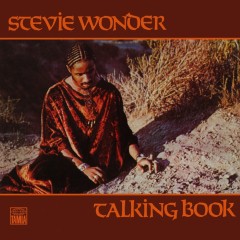
Cover NOT yet available in

Join up for 4K upload/download access
Your Rating (Click a star below)

Track List
10) I Believe (When I Fall in Love It Will Be Fo
01) You Are the Sunshine of My Life
02) Maybe Your Baby
03) You and I
04) Tuesday Heartbreak
05) You've Got It Bad Girl
06) Superstition

07) Big Brother
08) Blame It on the Sun
09) Lookin' for Another Pure Love
10) I Believe (When I Fall in Love It Will Be Fo
01) You Are the Sunshine of My Life
02) Maybe Your Baby
03) You and I
04) Tuesday Heartbreak
05) You've Got It Bad Girl
06) Superstition
07) Big Brother
08) Blame It on the Sun
09) Lookin' for Another Pure Love

4:51
2:58
6:50
4:38
3:02
4:57
4:26
3:33
3:26
4:43
Data Complete 80%
Total Rating
Total Rating
 (2 users)
Back Cover
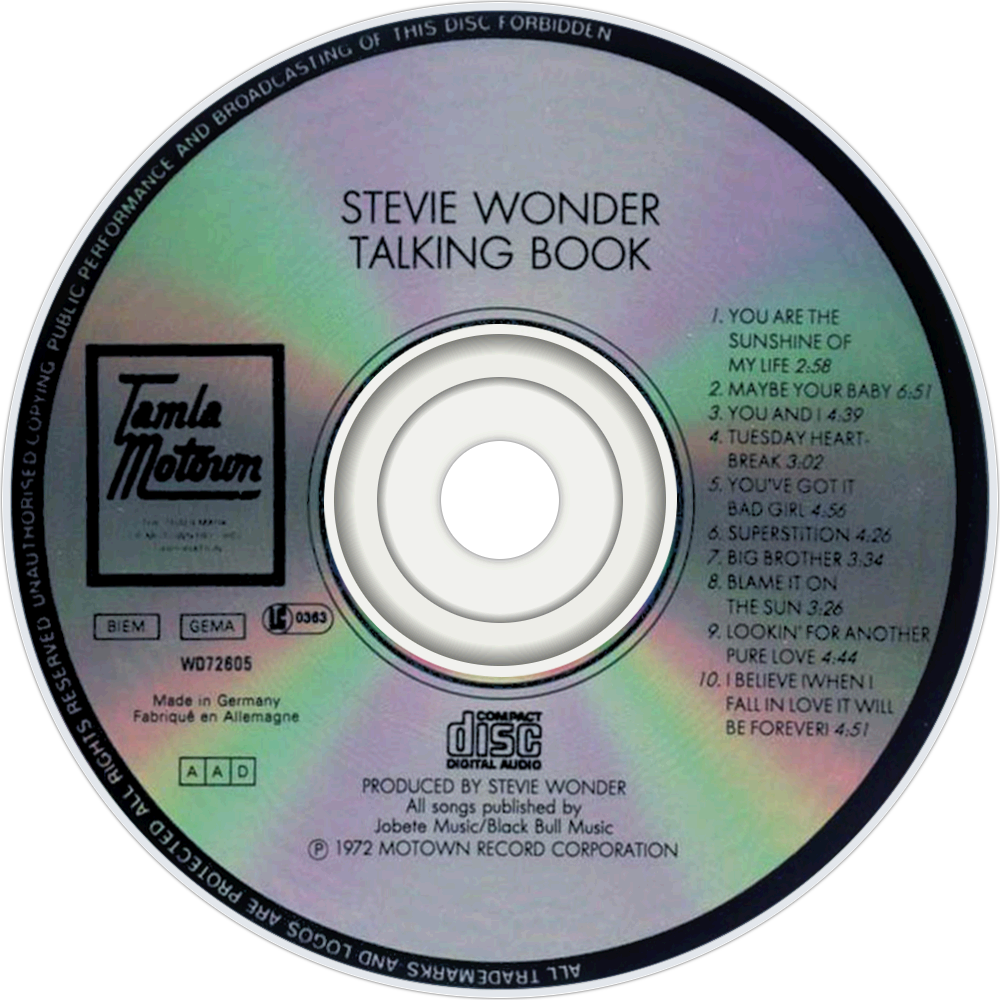
CD Art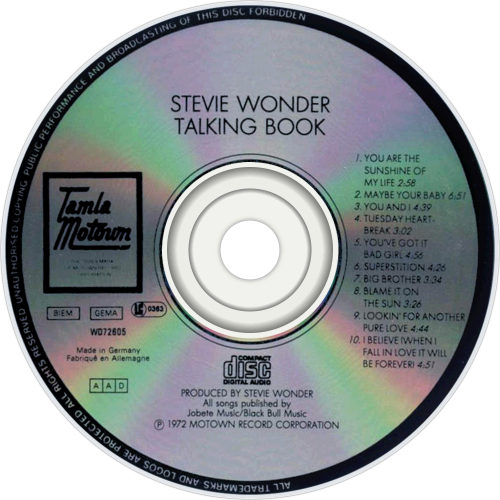
3D Case
3D Thumb
3D Flat
3D Face
3D Spine
First Released
 1972
1972
 R&B
R&B
 In Love
 Urban/R&B
---
 Medium
 Album
Album
62/100
 00601215735420
 0 copies
Album Description
Available in:


Talking Book (1972) est le quinzième album studio de Stevie Wonder, paru le 28 octobre 1972 sous le label Motown.
Marquant le début de sa « période classique », ce disque témoigne d'une liberté artistique totale vis-à-vis de la maison de disques. La production, assurée par Malcolm Cecil et Robert Margouleff, repose sur une superposition complexe de claviers et de synthétiseurs (Arp & Moog, Fender Rhodes), remplaçant les arrangements orchestraux traditionnels. L'usage du Hohner clavinet modèle C sur le titre « Superstition » est devenu une référence technique absolue.
Porté par les succès « You Are the Sunshine of My Life » et « Superstition », l'album a remporté trois Grammy Awards en 1974 et a contribué à l'unification des publics rock et R&B.
L'opus inclut également des collaborations avec Jeff Beck et David Sanborn.

User Album Review
As the second of five consecutive albums which made up Stevie’s classic period, Talking Book found Wonder at the top of his game, combining tight song writing with warm electronic arrangements and effervescent vocal performances.
Released in 1972 and sandwiched between the release of Music of My Mind and Innervisions, Talking Book saw the then 22 year-old Wonder enjoying more artistic freedom from Motown, taking over the production reins and playing most of the instruments himself. As a result, the sound of the album is sharply defined by Wonder's exquisite keyboard work, and his use of the Hohner clavinet model C on Superstition became widely regarded as one of the definitive tracks featuring the instrument.
Despite making the majority of Talking Book himself, the album also benefits from the talents of guest guitarists Jeff Beck, Buzzy Feton and Ray Parker, Jr who featured on Maybe Your Baby and Lookin' For Another Pure Love.
Wonder won three awards for Talking Book at the 1974 Grammys with You Are the Sunshine Of My Life winning Best Male Pop Vocal Performance and Superstition picking up both Best Male R&B Vocal Performance and Best R&B Song.
External Album Reviews
None...
User Comments

Available in:
Talking Book (1972) est le quinzième album studio de Stevie Wonder, paru le 28 octobre 1972 sous le label Motown.
Marquant le début de sa « période classique », ce disque témoigne d'une liberté artistique totale vis-à-vis de la maison de disques. La production, assurée par Malcolm Cecil et Robert Margouleff, repose sur une superposition complexe de claviers et de synthétiseurs (Arp & Moog, Fender Rhodes), remplaçant les arrangements orchestraux traditionnels. L'usage du Hohner clavinet modèle C sur le titre « Superstition » est devenu une référence technique absolue.
Porté par les succès « You Are the Sunshine of My Life » et « Superstition », l'album a remporté trois Grammy Awards en 1974 et a contribué à l'unification des publics rock et R&B.
L'opus inclut également des collaborations avec Jeff Beck et David Sanborn.
User Album Review
As the second of five consecutive albums which made up Stevie’s classic period, Talking Book found Wonder at the top of his game, combining tight song writing with warm electronic arrangements and effervescent vocal performances.
Released in 1972 and sandwiched between the release of Music of My Mind and Innervisions, Talking Book saw the then 22 year-old Wonder enjoying more artistic freedom from Motown, taking over the production reins and playing most of the instruments himself. As a result, the sound of the album is sharply defined by Wonder's exquisite keyboard work, and his use of the Hohner clavinet model C on Superstition became widely regarded as one of the definitive tracks featuring the instrument.
Despite making the majority of Talking Book himself, the album also benefits from the talents of guest guitarists Jeff Beck, Buzzy Feton and Ray Parker, Jr who featured on Maybe Your Baby and Lookin' For Another Pure Love.
Wonder won three awards for Talking Book at the 1974 Grammys with You Are the Sunshine Of My Life winning Best Male Pop Vocal Performance and Superstition picking up both Best Male R&B Vocal Performance and Best R&B Song.
External Album Reviews
None...
User Comments
No comments yet...
Status
 unlocked
External Links


