 (1 users)


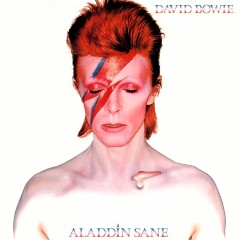
Cover NOT yet available in

Join up for 4K upload/download access
Your Rating (Click a star below)

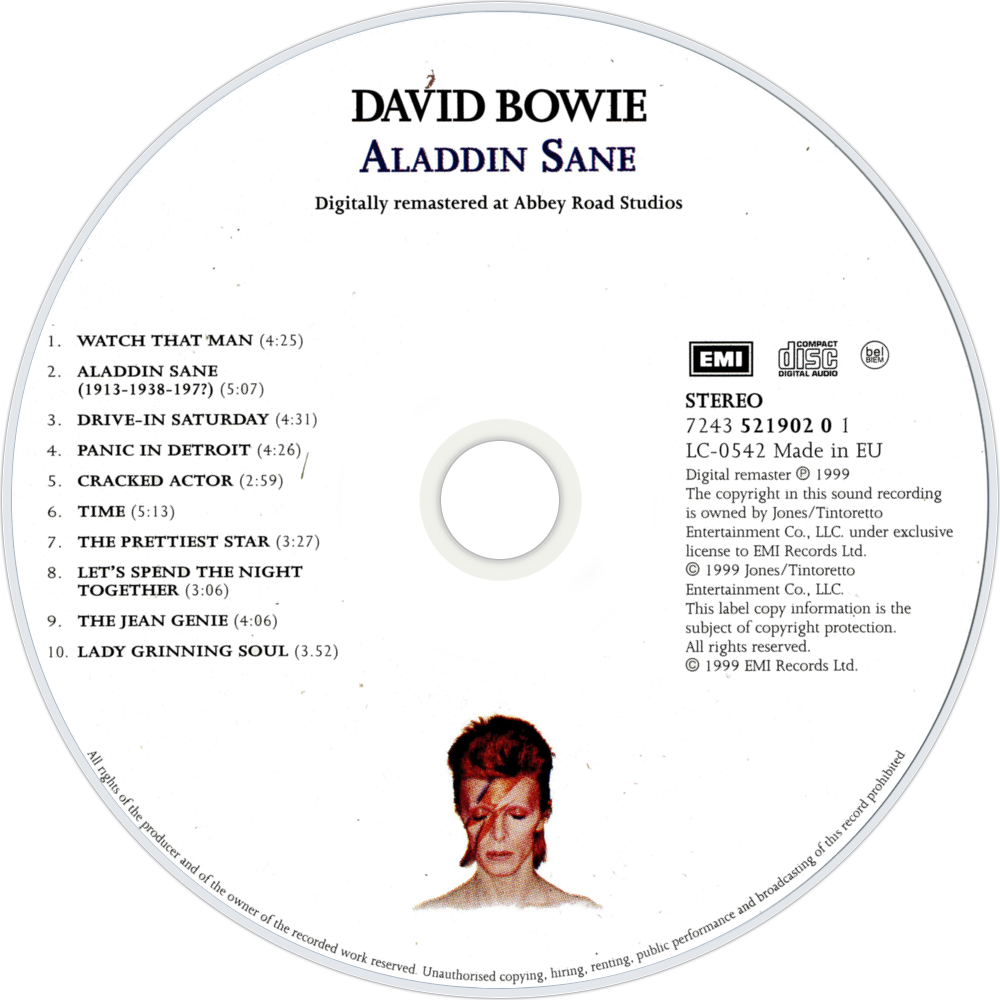
Track List
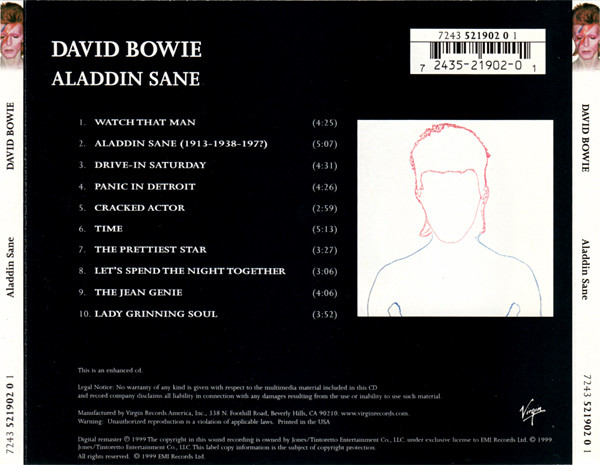
02) Aladdin Sane (1913–1938–197?)
04) Panic in Detroit
01) Watch That Man
03) Drive-In Saturday
05) Cracked Actor
06) Time
07) The Prettiest Star
08) Let's Spend the Night Together
09) The Jean Genie
10) Lady Grinning Soul
02) Aladdin Sane (1913–1938–197?)
04) Panic in Detroit
01) Watch That Man
03) Drive-In Saturday
05) Cracked Actor
06) Time
07) The Prettiest Star
08) Let's Spend the Night Together
09) The Jean Genie
10) Lady Grinning Soul

5:07
4:24
4:29
4:32
3:01
5:14
3:31
3:10
4:07
3:53
Data Complete 80%
Total Rating
Total Rating
 (5 users)
Back Cover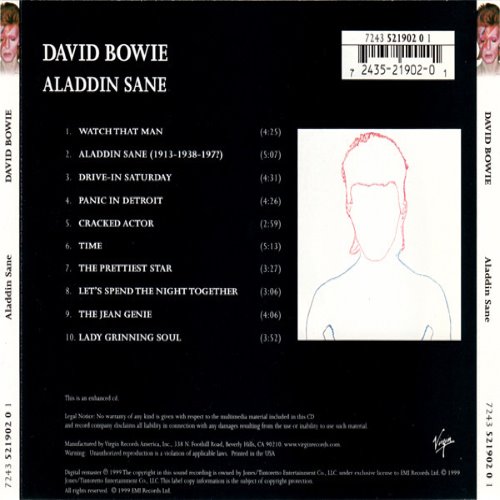
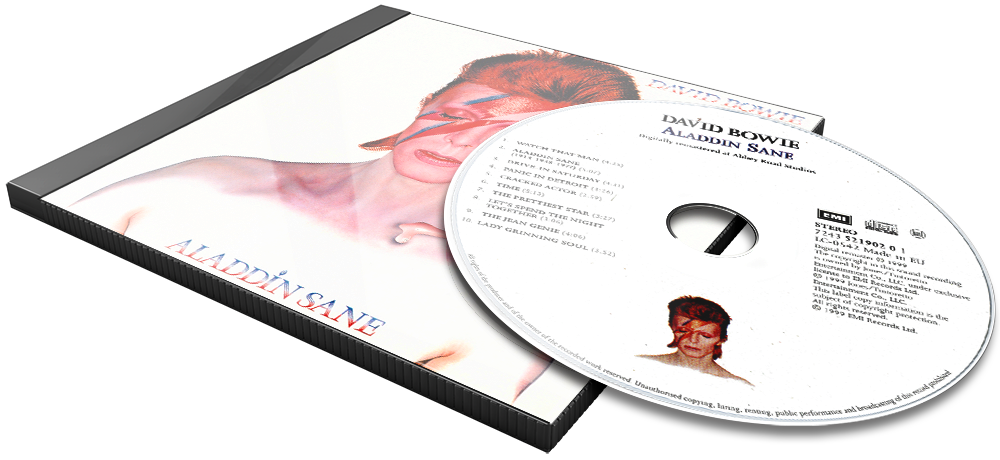
CD Art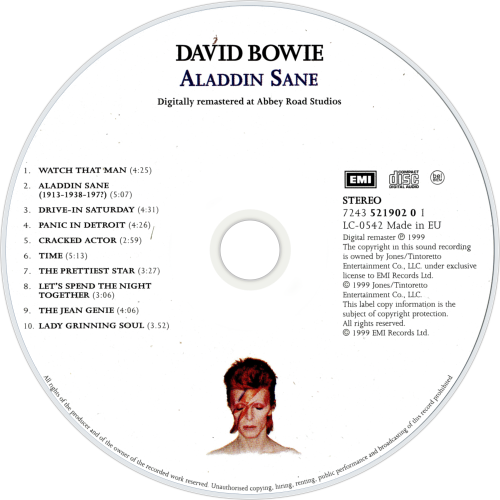
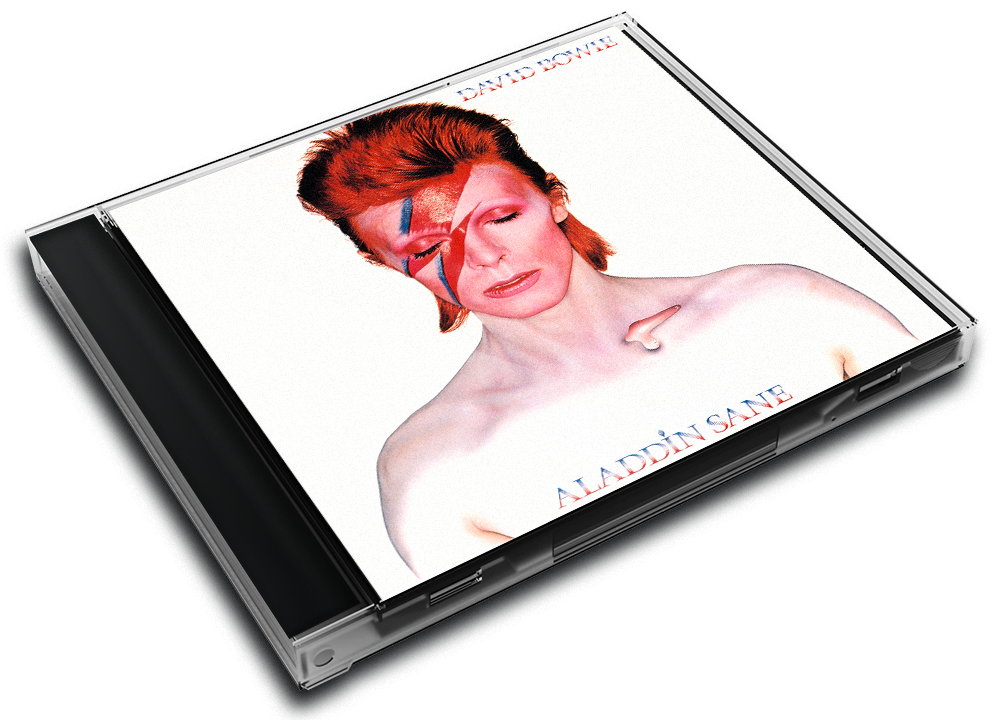
3D Case
3D Thumb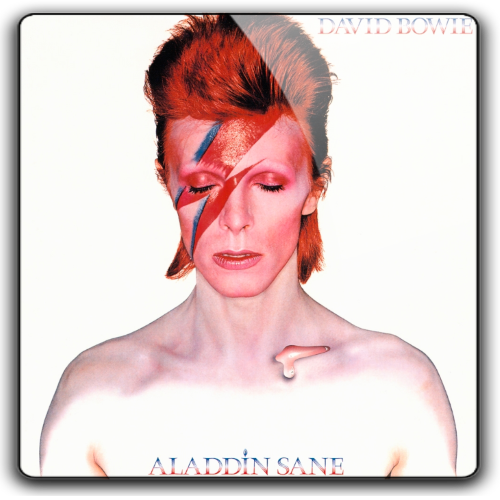
3D Flat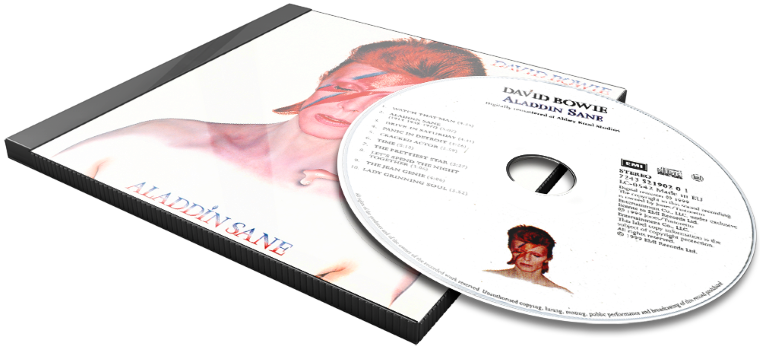
3D Face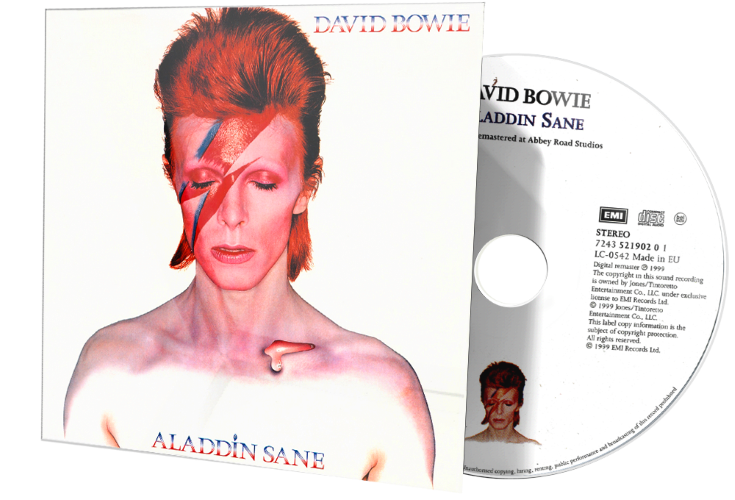
3D Spine
First Released
 1973
1973
 Rock
Rock
 Epic
Epic
 Rock/Pop
---
 Medium
 Album
Album
0/100
 0724352190256
 0 copies
Album Description
Available in:

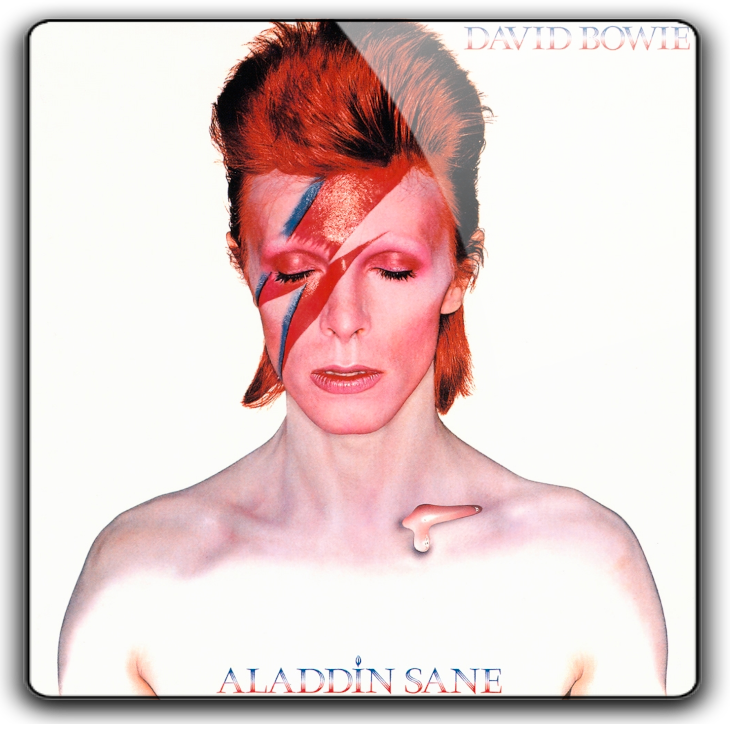
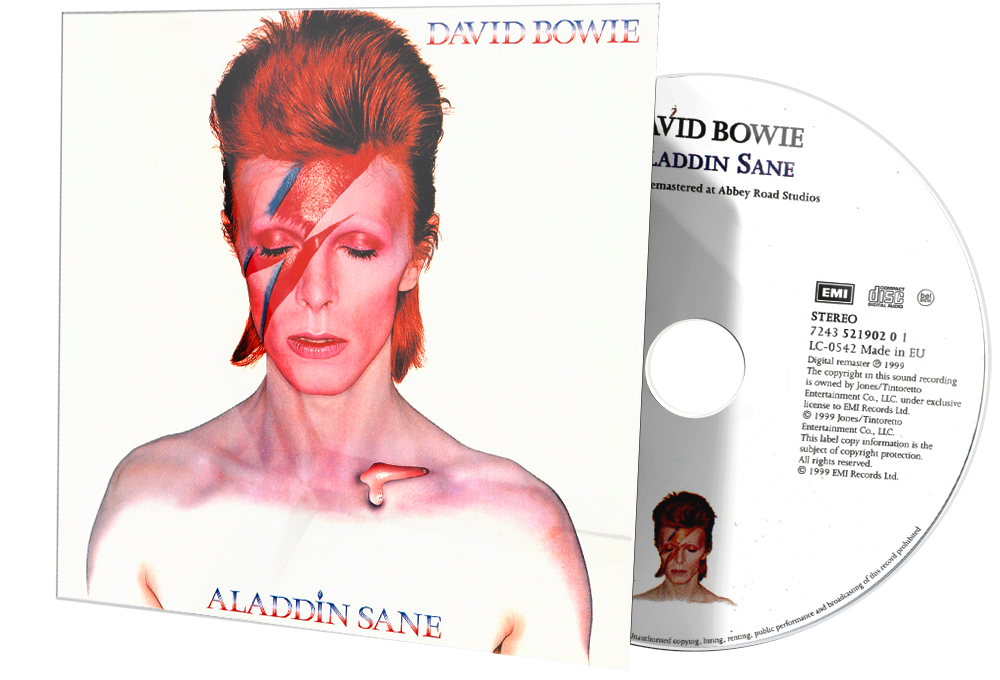
Paru en 1973 chez RCA Records, Aladdin Sane constitue le sixième album studio de David Bowie et le premier qu'il conçoit avec le statut de rock star internationale, succédant à l'explosion planétaire de Ziggy Stardust.
Véritable objet de fascination critique, le disque divise autant qu'il fascine : si certains observateurs de l'époque comme le NME ont pu le juger imparfait, d'autres, à l'instar de Nicholas Pegg, y voient l'une des œuvres les plus urgentes et essentielles de sa carrière.
Entre la frénésie habituelle du rockeur et une forme de détachement inédite, Bowie y déploie une énergie qui oscille entre la tension brute et une sophistication stylistique grandissante.
Consacré comme une pièce maîtresse de sa discographie par Rolling Stone, qui l'a hissé à la 277e place de son classement des 500 plus grands albums de tous les temps, ainsi que par Pitchfork dans son top 100 des années 70, cet opus reste un témoignage saisissant de la mue d'un artiste en constante réinvention, dont la force créatrice continue d'irradier plus de cinquante ans après sa sortie.

User Album Review
From the first crashing chord of ''Watch That Man'' you know that this is a rock'n' roll album. If Ziggy Stardust was his Sgt. Pepper (a loose-fitting concept about an alter-ego rock band, but staggeringly good songs), then Aladdin Sane is Bowie's Exile on Main Street and, as if to prove a point, there's even a cover of a Stones song on here: the staunch rocker ''Let's Spend the Night Together''.
The riffs come thick and fast. Mick Ronson might lack Keith Richards' blues licks - he plays guitar like a Hull mechanic, which was pretty much what he was when he joined the Spiders from Mars - but boy, can he play. Listen to ''Jean Genie'', ''Cracked Actor'' and ''Panic In Detroit''. Ronson's six-string shuffle turns his guitar's sound into something that chases you with teeth.
Bowie described this album as 'Ziggy in America', and the rock'n' roll is certainly more down to earth than its predecessor, with the notable exception of the space-age ''Drive in Saturday'', the other-worldly ''Lady Grinning Soul'' and ''Time'', with its echoes of pre-war Berlin cabaret neatly prefiguring Bowie's own sojourn in that city in the later Seventies. Mott the Hoople turned down ''Drive in Saturday'' as a follow up to ''All the Young Dudes'', which was a shame perhaps, but Bowie's recording is wonderfully atmospheric, and it is difficult to imagine anyone else capturing that languid 'Gee it's hot, let's go to bed' feel in quite the same way. 'Pour me out another phone', he sighs, before name-checking Twiggy and someone called Buddy.
Pianist Mike Garson is consistently great throughout this album, and an important adjunct to the Bowie house-band. His weary, decadent piano - put to particular good use on the title track -''Aladdin Sane (1913-1938-197?)'' - was one of the album's talking points when it was first released in 1973. It's lost none of its freeform, jazzy sparkle in thirty years and still sounds as Jackson Pollock's blobs might, had they been splattered onto sheet music instead of canvas.
The bonus disc accompanying this 30th anniversary pressing comprises four relatively interesting tracks - Bowie's own 1973 recording of ''All the Young Dudes'', a sax version of his 1972 hit, ''John, Im Only Dancing'', and the single mixes of ''Time'' and ''Jean Genie'' - and various live out-takes from American gigs of the Seventies.
Aladdin Sane is one of the finest forty-five minutes in rock. 'Crack, baby, crack; show me you're real' he demands on ''Cracked Actor'': a chameleon lost, for one glorious moment, in his own camouflage.
External Album Reviews
None...
User Comments

Available in:
Paru en 1973 chez RCA Records, Aladdin Sane constitue le sixième album studio de David Bowie et le premier qu'il conçoit avec le statut de rock star internationale, succédant à l'explosion planétaire de Ziggy Stardust.
Véritable objet de fascination critique, le disque divise autant qu'il fascine : si certains observateurs de l'époque comme le NME ont pu le juger imparfait, d'autres, à l'instar de Nicholas Pegg, y voient l'une des œuvres les plus urgentes et essentielles de sa carrière.
Entre la frénésie habituelle du rockeur et une forme de détachement inédite, Bowie y déploie une énergie qui oscille entre la tension brute et une sophistication stylistique grandissante.
Consacré comme une pièce maîtresse de sa discographie par Rolling Stone, qui l'a hissé à la 277e place de son classement des 500 plus grands albums de tous les temps, ainsi que par Pitchfork dans son top 100 des années 70, cet opus reste un témoignage saisissant de la mue d'un artiste en constante réinvention, dont la force créatrice continue d'irradier plus de cinquante ans après sa sortie.
User Album Review
From the first crashing chord of ''Watch That Man'' you know that this is a rock'n' roll album. If Ziggy Stardust was his Sgt. Pepper (a loose-fitting concept about an alter-ego rock band, but staggeringly good songs), then Aladdin Sane is Bowie's Exile on Main Street and, as if to prove a point, there's even a cover of a Stones song on here: the staunch rocker ''Let's Spend the Night Together''.
The riffs come thick and fast. Mick Ronson might lack Keith Richards' blues licks - he plays guitar like a Hull mechanic, which was pretty much what he was when he joined the Spiders from Mars - but boy, can he play. Listen to ''Jean Genie'', ''Cracked Actor'' and ''Panic In Detroit''. Ronson's six-string shuffle turns his guitar's sound into something that chases you with teeth.
Bowie described this album as 'Ziggy in America', and the rock'n' roll is certainly more down to earth than its predecessor, with the notable exception of the space-age ''Drive in Saturday'', the other-worldly ''Lady Grinning Soul'' and ''Time'', with its echoes of pre-war Berlin cabaret neatly prefiguring Bowie's own sojourn in that city in the later Seventies. Mott the Hoople turned down ''Drive in Saturday'' as a follow up to ''All the Young Dudes'', which was a shame perhaps, but Bowie's recording is wonderfully atmospheric, and it is difficult to imagine anyone else capturing that languid 'Gee it's hot, let's go to bed' feel in quite the same way. 'Pour me out another phone', he sighs, before name-checking Twiggy and someone called Buddy.
Pianist Mike Garson is consistently great throughout this album, and an important adjunct to the Bowie house-band. His weary, decadent piano - put to particular good use on the title track -''Aladdin Sane (1913-1938-197?)'' - was one of the album's talking points when it was first released in 1973. It's lost none of its freeform, jazzy sparkle in thirty years and still sounds as Jackson Pollock's blobs might, had they been splattered onto sheet music instead of canvas.
The bonus disc accompanying this 30th anniversary pressing comprises four relatively interesting tracks - Bowie's own 1973 recording of ''All the Young Dudes'', a sax version of his 1972 hit, ''John, Im Only Dancing'', and the single mixes of ''Time'' and ''Jean Genie'' - and various live out-takes from American gigs of the Seventies.
Aladdin Sane is one of the finest forty-five minutes in rock. 'Crack, baby, crack; show me you're real' he demands on ''Cracked Actor'': a chameleon lost, for one glorious moment, in his own camouflage.
External Album Reviews
None...
User Comments
No comments yet...
Status
 unlocked
External Links


