 (0 users)


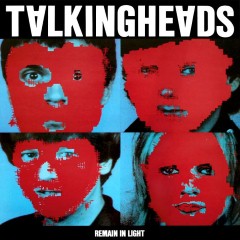
Cover NOT yet available in

Join up for 4K upload/download access
Your Rating (Click a star below)

Track List
01) Born Under Punches (The Heat Goes On)
02) Crosseyed and Painless
03) The Great Curve
04) Once in a Lifetime

05) Houses in Motion
06) Seen and Not Seen
07) Listening Wind
08) The Overload
01) Born Under Punches (The Heat Goes On)
02) Crosseyed and Painless
03) The Great Curve
04) Once in a Lifetime
05) Houses in Motion
06) Seen and Not Seen
07) Listening Wind
08) The Overload

5:48
4:47
6:27
4:22
4:33
3:24
4:43
6:00
Data Complete 80%
Total Rating
Total Rating
 (4 users)
Back Cover
CD Art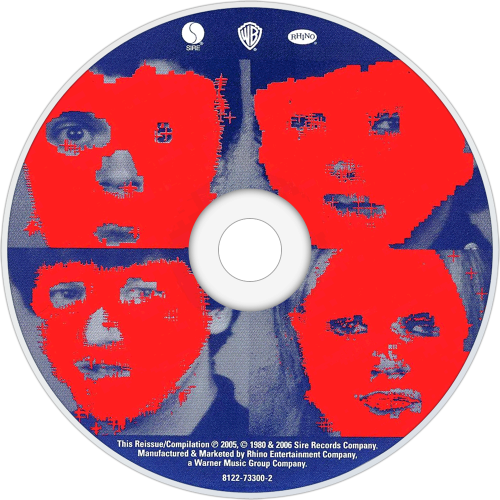
3D Case
3D Thumb
3D Flat
3D Face
3D Spine
First Released
 1980
1980
 New Wave
 Enlightened
 Rock/Pop
---
 Medium
 Album
Album
50/100
 075992609562
 0 copies
Album Description
Available in:

Sorti en 1980, Remain in Light constitue l'aboutissement de la transition musicale amorcée par les Talking Heads sur Fear of Music.
S'appuyant sur les prémices rythmiques de titres comme « I Zimbra » ou « Life During Wartime », le groupe explore ici en profondeur les polyrythmies africaines au sein de morceaux portés par des grooves intenses et répétitifs.
David Byrne y superpose son chant et ses textes habituels, fragmentés et déconnectés, qui, bien que plus nombreux que jamais, se fondent dans une dynamique musicale devenue l'élément central et souverain de l'œuvre.
L'album est porté par le morceau « Once in a Lifetime », qui, malgré un accueil mitigé à sa sortie initiale, est devenu un pilier du répertoire du groupe.
Son succès sur la durée fut assuré par son clip marquant, sa présence dans le film de concert Stop Making Sense (1984) et une utilisation cinématographique ultérieure en 1986, qui lui permit de faire une percée dans les charts.
L'oscillation entre le malaise existentiel des couplets (« And you may ask yourself, well, how did I get here? ») et le refrain rassurant (« Letting the days go by ») illustre parfaitement l'ambivalence artistique de Byrne.
Remain in Light s'est imposé comme un succès commercial et une œuvre d'une inventivité rare, prouvant que le public était prêt à suivre l'audacieuse évolution sonore du groupe.
Influente et avant-gardiste, cette réalisation a marqué la fin d'une ère dans le développement du groupe, précédant une pause de trois ans avant la parution de leur prochain album studio.

User Album Review
There’s a chance, slim though it may be, that you haven’t yet listened to Remain in Light. Please, find and play it now. Feet tapping, and fingers clicking? That’s to be expected. Soon, exquisite textures come into focus. Brilliant, isn’t it? An album that sounds as fresh in 2012 as it ever has.
Each time Remain in Light’s 40 minutes pass you by there’s likely to be something new to hear. Fidgety opener Born Under Punches is one of a handful of cuts that seems to get itself locked into an infinite loop – a good thing. It, like the equally muscular, equally wired The Great Curve, utilises club-land repetition mapped to Afrobeat-at-double-speed architecture to create an end product that’s utterly hypnotic.
Remain in Light wasn’t the first time Talking Heads, helmed by the inimitable David Byrne, had worked with producer Brian Eno. Nor was it the first time they’d incorporated elements of "world" music: debut set Talking Heads: 77’s opener, Uh-oh, Love Comes to Town, features steelpan sounds from the Caribbean. But it was (is!) the indubitable zenith of both the band’s Eno collaborations and their explorations beyond art/post-punk and new wave templates.
Whilst Byrne and bandmates’ intentions from the outset were framed by the desire to experiment, Remain in Light is a perfectly accessible affair, never losing sight of the following Talking Heads had attracted via minor single hits like Psycho Killer and their cover of Al Green’s Take Me to the River.
This mainstream-savvy sensibility is encapsulated by Once in a Lifetime. Far from Remain in Light’s most riveting moment, it’s nevertheless the ideal introduction to this set: Eno’s introduction of Fela Kuti-inspired rhythms lends the track a savant edge, but Byrne’s aspiration-meets-realism lyricism connects with a universal audience. With MTV offering support come the station’s 1981 launch, the track was Talking Heads’ best-known song until it was out-radio-played by 1985’s Road to Nowhere.
Road to Nowhere’s parent LP, Little Creatures, can’t match Remain in Light’s bravado, though. This fourth album illustrates how keen ambition could gel with commercial nous, with results that dazzle. Even in its darker turns - closer The Overload the obvious example -these eight tracks continue to fascinate over 30 years after their creation.
In short: same as it ever was, same as it ever was…
External Album Reviews
None...
User Comments

Available in:
Sorti en 1980, Remain in Light constitue l'aboutissement de la transition musicale amorcée par les Talking Heads sur Fear of Music.
S'appuyant sur les prémices rythmiques de titres comme « I Zimbra » ou « Life During Wartime », le groupe explore ici en profondeur les polyrythmies africaines au sein de morceaux portés par des grooves intenses et répétitifs.
David Byrne y superpose son chant et ses textes habituels, fragmentés et déconnectés, qui, bien que plus nombreux que jamais, se fondent dans une dynamique musicale devenue l'élément central et souverain de l'œuvre.
L'album est porté par le morceau « Once in a Lifetime », qui, malgré un accueil mitigé à sa sortie initiale, est devenu un pilier du répertoire du groupe.
Son succès sur la durée fut assuré par son clip marquant, sa présence dans le film de concert Stop Making Sense (1984) et une utilisation cinématographique ultérieure en 1986, qui lui permit de faire une percée dans les charts.
L'oscillation entre le malaise existentiel des couplets (« And you may ask yourself, well, how did I get here? ») et le refrain rassurant (« Letting the days go by ») illustre parfaitement l'ambivalence artistique de Byrne.
Remain in Light s'est imposé comme un succès commercial et une œuvre d'une inventivité rare, prouvant que le public était prêt à suivre l'audacieuse évolution sonore du groupe.
Influente et avant-gardiste, cette réalisation a marqué la fin d'une ère dans le développement du groupe, précédant une pause de trois ans avant la parution de leur prochain album studio.
User Album Review
There’s a chance, slim though it may be, that you haven’t yet listened to Remain in Light. Please, find and play it now. Feet tapping, and fingers clicking? That’s to be expected. Soon, exquisite textures come into focus. Brilliant, isn’t it? An album that sounds as fresh in 2012 as it ever has.
Each time Remain in Light’s 40 minutes pass you by there’s likely to be something new to hear. Fidgety opener Born Under Punches is one of a handful of cuts that seems to get itself locked into an infinite loop – a good thing. It, like the equally muscular, equally wired The Great Curve, utilises club-land repetition mapped to Afrobeat-at-double-speed architecture to create an end product that’s utterly hypnotic.
Remain in Light wasn’t the first time Talking Heads, helmed by the inimitable David Byrne, had worked with producer Brian Eno. Nor was it the first time they’d incorporated elements of "world" music: debut set Talking Heads: 77’s opener, Uh-oh, Love Comes to Town, features steelpan sounds from the Caribbean. But it was (is!) the indubitable zenith of both the band’s Eno collaborations and their explorations beyond art/post-punk and new wave templates.
Whilst Byrne and bandmates’ intentions from the outset were framed by the desire to experiment, Remain in Light is a perfectly accessible affair, never losing sight of the following Talking Heads had attracted via minor single hits like Psycho Killer and their cover of Al Green’s Take Me to the River.
This mainstream-savvy sensibility is encapsulated by Once in a Lifetime. Far from Remain in Light’s most riveting moment, it’s nevertheless the ideal introduction to this set: Eno’s introduction of Fela Kuti-inspired rhythms lends the track a savant edge, but Byrne’s aspiration-meets-realism lyricism connects with a universal audience. With MTV offering support come the station’s 1981 launch, the track was Talking Heads’ best-known song until it was out-radio-played by 1985’s Road to Nowhere.
Road to Nowhere’s parent LP, Little Creatures, can’t match Remain in Light’s bravado, though. This fourth album illustrates how keen ambition could gel with commercial nous, with results that dazzle. Even in its darker turns - closer The Overload the obvious example -these eight tracks continue to fascinate over 30 years after their creation.
In short: same as it ever was, same as it ever was…
External Album Reviews
None...
User Comments
No comments yet...
Status
 unlocked
External Links


