 (0 users)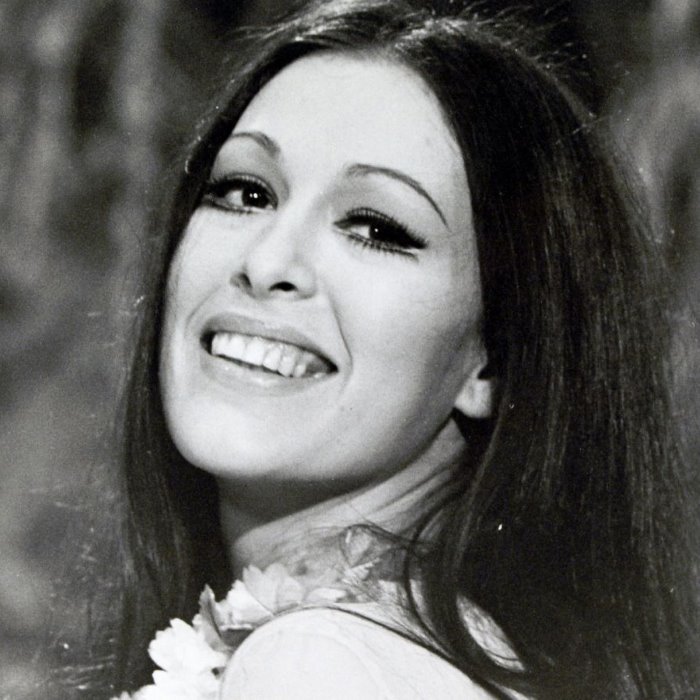
 view
view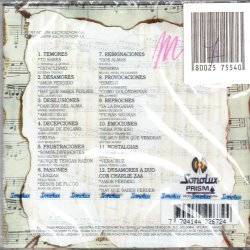 1997 -
  1983 -
  1976 -
 Members
1 Female
Popularity
 47
47
Followers
187,426
Origin
 Madrid, Spain
Genre
---
Style
---
Mood
---
Born
1 Female
Popularity
47Followers
187,426
Origin
Madrid, SpainGenre
---
Style
---
Mood
---
Born
1947
Active 1966 to Present...
Cutout
 Most Loved Tracks
| Track | Last.FM Listens | Youtube views | Loves | |
|---|---|---|---|---|
| Brindaremos por él | 7,911 | 4 users  | |
| Eres | 43,391 | 4 users | |
 | Rosas en el mar | 30,463 | 4 users |
 Music Video Links
Artist Biography
Available in:

Massiel (real name Maria de los Angeles Santamaria Espinosa) is a Spanish singer. She was born on August 2, 1947 in Madrid but her parents were from Asturias. His father Emilio was a renowned artist manager.
Her cuban ballet teacher put María the nickname of Massiel. She made her debut in 1966 with "Di que no", considered as one of the first protest songs in Spain, a genre that would increase its popularity till the end of the Franco's dictatorship.
She gained inmediately success with hits like "Rosas en el mar", "Rufo el Pescador" or "Aleluya nº1" and appearances in song contests like Vina del Mar, Majorca and Rome. She also made films like "Vestida de novia" and "codo con codo". All her songs had compromised lyrics so she was then catalogued as a "protest singer".
During the 1968 spring she was touring Mexico when Spanish Television called her urgently to represent Spain in the 13th Eurovision Song Contest due to the withdrawal of Joan Manuel Serrat who wanted to sing in catalan the song "La, la, la".
Serrat announced his intention just 15 days before going to London, so Massiel had to came back to Madrid, record the song in Spanish, English, French and German, appear in some european tv stations and go to Paris to buy a costume designed by Courrèges specially for the Contest. Eventually, she won the Eurovision Song Contest 1968 with the song "La, la, la", which earned 29 points, beating out famous British pop crooner Cliff Richard, who placed second that year with "Congratulations". She continued to perform in Stage shows, and records music.
Massiel appeared in the film Cantando a la Vida filmed in 1968, which profiled a winner of a European Song festival suddenly disappearing. Massiel had the lead role as "Maria". The movie was filmed in Andalucía, Spain. Massiel sang the entire soundtrack to the film, and raked in 9,020,397 pesetas from the box office.
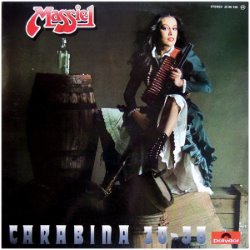
In 1977, she released an album covering the music of Bertolt Brecht/Kurt Weill in Spanish, called "Baladas Y Canciones De Bertolt Brecht".
During the 80's Massiel, for her popularity in the local market with popular hits like "Eres", "Mas fuerte que el viento", "El Noa-Noa", "Maria de los guardias", was an invited artist at the Festival de Vina del Mar in Chile.
At the time Chile was under the dicatorship of Augusto Pinochet. Massiel after singing for an hour, received the most important prize of the festival: "La Gaviota de Plata" (The Silver Seagull) In her her speech thanking the public for her "Gaviota" she said: "Thank you Chile, I would like to let you kno that Patricio Manns says hello from the Andes Mountains", the public cheered and celebrated her announcement. Patricio Mans is a well know composer, poet, member of the Chilean Communist Party who was in exile in Sweden following the September 11th, 1973 coup d'etat against Salvador Allende.
She has recorded more than 50 records, having worked for no less than 5 record companies: Zafiro, Polygram, Hispavox, Bat Discos y Emasstor. She has been married three times and has a son, Aitor, born in 1977, from her second husband, a socialist politician called Carlos Zayas. Since 1996 she is retired from singing due to the "dictatorship of radio stations and commercial charts" but she is still a popular woman and is a regular in different tv programmes. .
She re-recorded her Eurovision winner "La, la, la" in 1997, with a "hip-hop" sort of beat, background singers, whistling, and spanish percussion.
in 2005, Massiel appeared on the 50th Anniversary special of the Eurovision Song Contest, and sang the song that made her internationally famous. She also was invited to celebrate the 50th anniversary of TVE during a special gala.
Currently she is working on Tve's Misión Eurovisión, a serie of special programmes to choose the spanish representative and song for Eurovision 2007.

Wide Thumb
Clearart
Fanart
Banner
User Comments
 No comments yet..
Status

Unlocked
Last Edit by GrabbenSwe
06th Apr 2024
Socials
Streaming
External Links