 (0 users)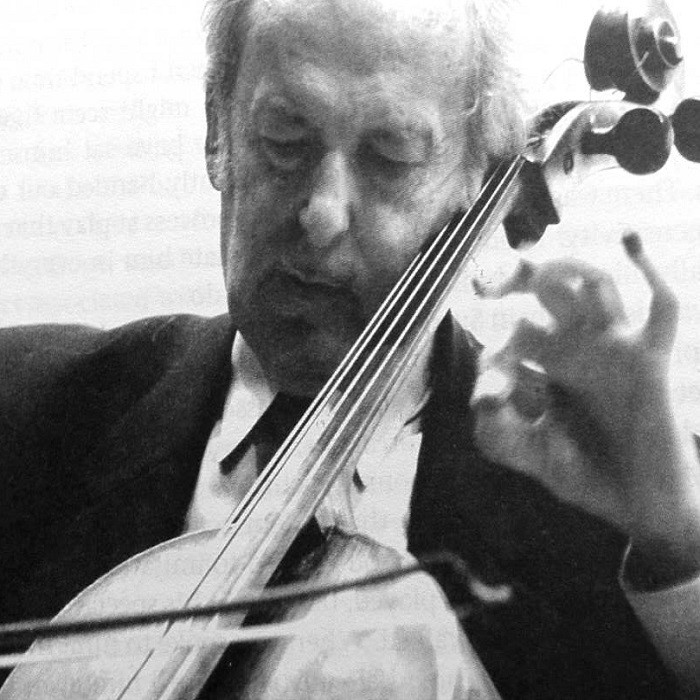
Album Releases  view
view
 2016 - Sonatas for Cello and Piano nos. 1-5
2003 - 5 Sonatas for Cello & Piano
2002 - Sonatas for Cello & Clavier
 1996 - Rachmaninov: Sonata for Cello and Piano in G minor, op. 19 /
 1990 - Sonatas
 1975 - Suiten für Violoncello solo
0 - Dvořák: Cello Concerto in B minor, op. 104 / Haydn: Cello
view 2016 - Sonatas for Cello and Piano nos. 1-5 2003 - 5 Sonatas for Cello & Piano 2002 - Sonatas for Cello & Clavier 1996 - Rachmaninov: Sonata for Cello and Piano in G minor, op. 19 / 1990 - Sonatas 1975 - Suiten für Violoncello solo 0 - Dvořák: Cello Concerto in B minor, op. 104 / Haydn: Cello Members
1 Male
Popularity
---
Followers
---
Origin
 Russian
Genre
 Classical
Style
---
Mood
---
Born
1 Male
Popularity
---
Followers
---
Origin
RussianGenre
ClassicalStyle
---
Mood
---
Born
1923
Active ---
--- 1997
1997
Cutout
Alternate Name
Daniil Shafran
 Most Loved Tracks
No loved tracks found...
 Music Video Links
Artist Biography
Available in:

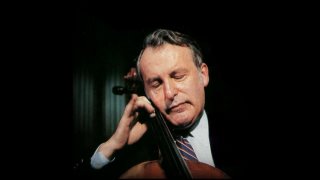
Daniil Borisovich Shafran (Даниил Борисович Шафран) born January 13, 1923 – February 7, 1997, was a Soviet Russian cellist.
Daniil Shafran was born in Petrograd (later Leningrad, then Saint Petersburg) in 1923. Even from before his birth he was surrounded by music. His mother and father were music students when he was born. His father, Boris Shafran, went on to be principal cellist of the Leningrad Philharmonic Orchestra and his mother, Frida Moiseyevna, was a pianist. He recounted how, as his mother went into labour, his father was practicing passages from Haydn's D major Concerto in preparation for a recital, and was reluctant to go to the hospital until he had mastered a difficult technical passage.
Shafran was initially taught by his father, whom he had long begged for lessons. When aged eight and a half, "my father met me brandishing a small cello. 'I bought you a cello', he cried. 'Sit down and we'll start studying'". His father was a serious musician and strict teacher and after year and a half under his tutelage, Shafran had absorbed many of the values that he held throughout his life: diligent and regular practice and the importance of striving for the highest goals. A key principle established was to overcome technical obstacles by learning to play far beyond the demands of the work, and Shafran learned to be "mercilessly strict with myself when practicing".
When he was ten years old (other sources say eight), his father took him to Alexander Shtrimer (1888–1961), then professor at the Leningrad Conservatory, for lessons. Initially this was at the Conservatory Special Music School for Children, where Shtrimer also taught, and then at the Conservatory itself where Shafran was one of ten talented children chosen to attend. Shafran remained with Shtrimer for more than ten years (into his early twenties). Though his father took a more active interest in his progress than might be "correct in terms of pedagogical ethics", he took no other teacher, commenting that "my own experiences and my association with my musician colleagues were all a 'second teacher' to me".
Shafran's first public performance was at the age of 10, at one of the Conservatory concerts, where he played two technically demanding works by David Popper: 'Spinning Song' and 'Elfentanz'. His orchestral debut was a year later, when 11, when he played Tchaikovsky's Rococo Variations with the Leningrad Philharmonic Orchestra under the visiting British conductor, Albert Coates.
At the age of 14, Shafran entered the 1937 USSR All-Union Competition for Violinists and Cellists, for young musicians from all Soviet states. Although strictly he was below the qualifying age limit, he was allowed to enter as an unofficial contestant and carried off the first prize. His age, "filigree virtuosity and poetic appearance had caused something of a sensation" and Shafran achieved national prominence. Shafran was also awarded a magnificent Antonio Amati cello as part of the prize.
Musical activity in Leningrad was heavily impacted by the Second World War. Among many other activities in Russia, the All-Union competition was suspended for 7 years. Only in 1945 was it held again, when the war in Russia was over, and this time the winner was the young Mstislav Rostropovich. By 1949, "Shafran’s supremacy as the country's leading young cellist was now being challenged by Rostropovich, four years his junior." Shafran and Rostropovich both entered the 1949 competition at the Festival of Democratic Youth, Budapest, and they tied for the first prize. David Oistrakh, a jury member at the competition, wrote "both cellists are complete masters of cello sound. Their light virtuosity and elegant technique should be the envy of many violinists".
The following year Shafran and Rostropovich again met in competition, at the Wihan contest in Prague – an event to commemorate the centenary of the Bohemian Cellist Hanus Wihan (1850–1920), himself a pupil of Karl Davydov. Shafran performed the Rococo Variations in the final round, (which by his own admission, he had not played successfully), and yet, again, Shafran and Rostropovich were the joint prize-winners.
When Shafran graduated from the Conservatory in 1950, he was now 27 years old, and Rostropovich 23. For almost a decade, they stood out as the two outstanding young Russian cellists. "Both had already achieved an extraordinary level of artistry, yet they were temperamentally very different. Shafran's attention to detail made him pre-eminent in miniature forms: his poetic sensibility and the remarkable palette of tone colours he had at his disposal suit him to romantic and impressionistic repertoire".

Wide Thumb
Clearart
Fanart
Banner
User Comments
 No comments yet..